Ardhanarishvara: When Shiva and Shakti are one
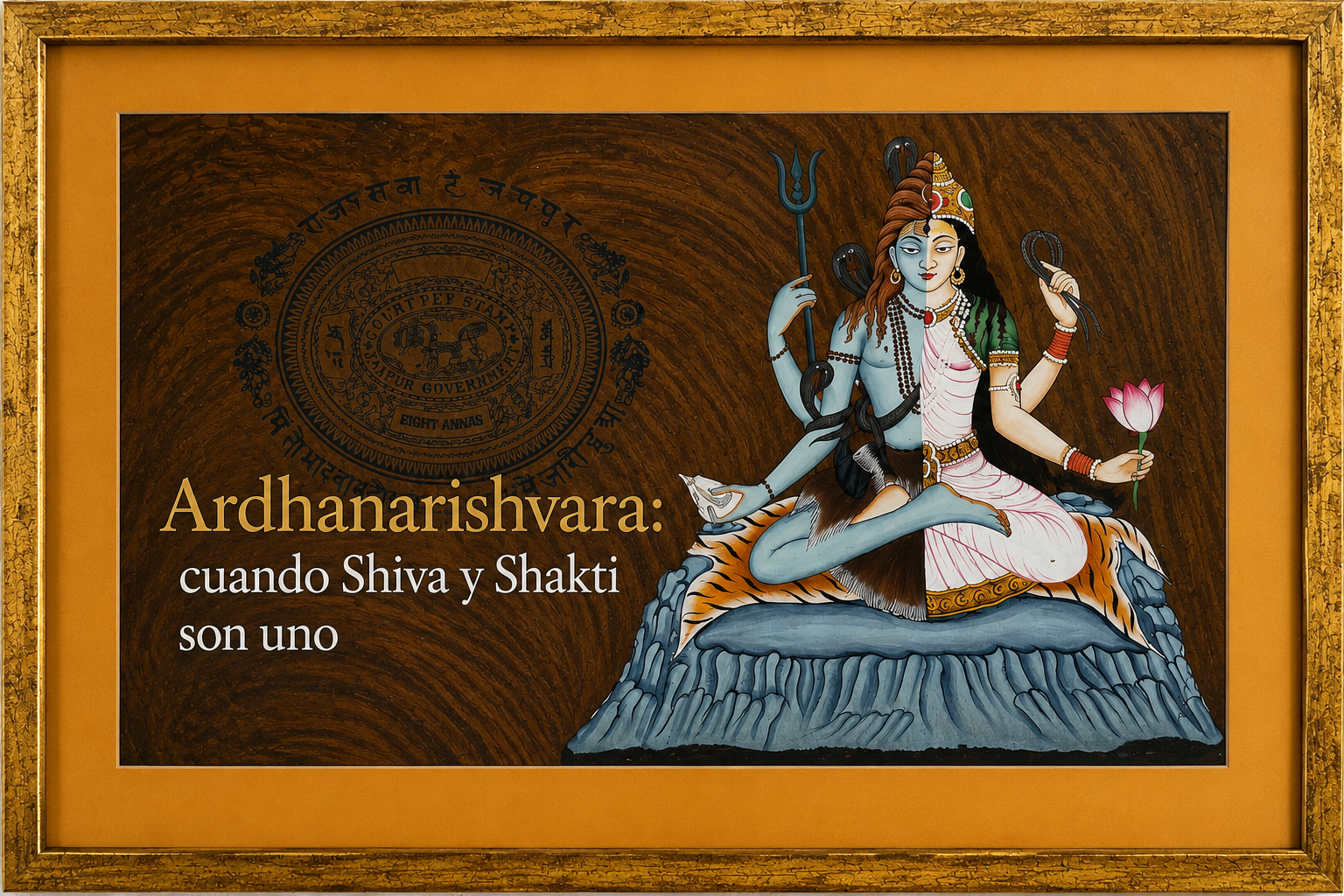
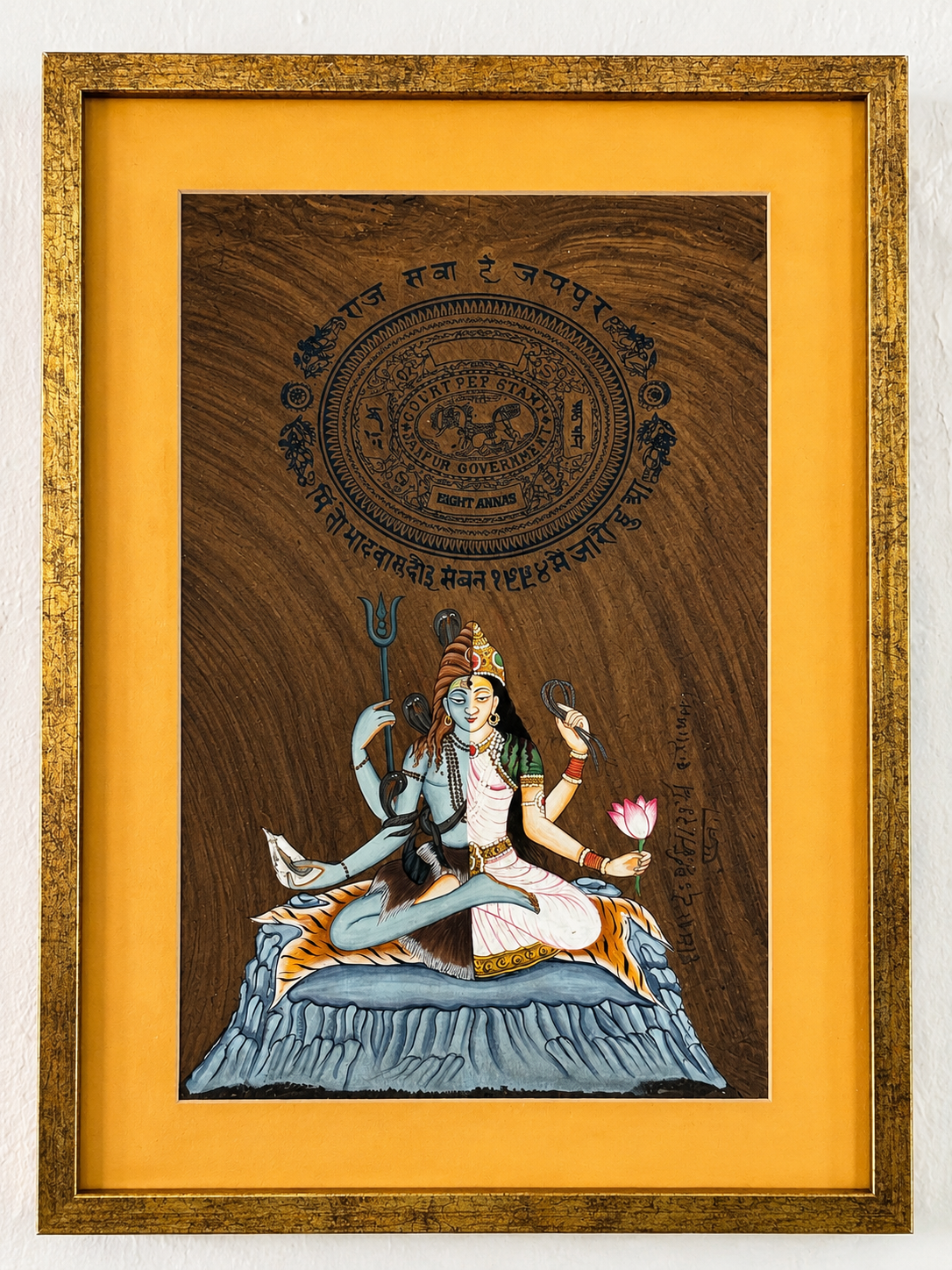
This image is an oil that was brought to me from Dehli, in India and represents the duality that is so important in Asia, ranging from the feminine-male, creation-destruction or ying and yang
Sometimes we think that reality is made up of opposites: man and woman, strength and tenderness, reason and intuition, destruction and creation. However, the Hindu tradition proposes a much deeper vision: these apparent dualities are, in reality, two manifestations of the same consciousness.
The image of Ardhanarishvara represents precisely that teaching. In it, the body appears divided into two inseparable halves. On the left we find Shiva, a symbol of consciousness, silence, immobility and transcendence. On the right, Shakti appears, represented as Parvati, the creative energy, nature, movement and life.
They are not two different beings. They are two aspects of a single reality.
In the philosophy of Hinduism, Shiva without Shakti remains immobile, unable to manifest. Shakti without Shiva would be an energy without direction or consciousness. Only together make the universe possible.
Duality also lives within us
This image does not speak only of gods. speaks of the human being.
We all have a part that seeks silence, reflection and contemplation, and another that needs to create, love, act and transform the world.
When one completely dominates the other, imbalances appear.
- A consciousness without energy can become isolation.
- An energy without consciousness can be transformed into impulsiveness and chaos.
True maturity consists in integrating both dimensions.
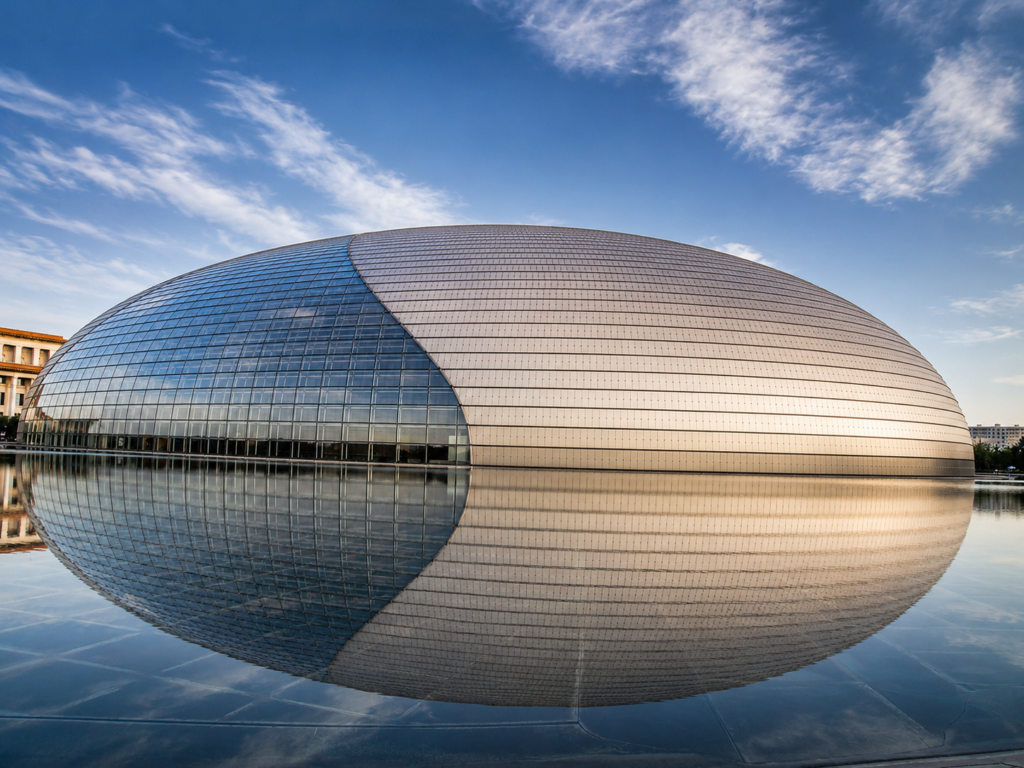
I took this photograph in Beijing, in front of the Great National Theater of China. What most caught my attention was not only its futuristic architecture, but the perfect reflection on the water. For a few moments I had the feeling of contemplating an immense representation of the Yin and the Yang.
In the West we usually think of reality as a struggle between opposites: right or wrong, reason or emotion, body or mind, masculine or feminine, success or failure. We choose one side and try to delete the other.
Chinese philosophy proposes a very different vision.
The Yin and the Yang They do not represent two opposing forces, but two inseparable aspects of the same reality.
Yin symbolizes receptivity, silence, darkness, earth, rest and intuition.
Yang represents activity, light, movement, sky, expansion and action.
Neither is better than the other.
Both are needed to exist.
There can be no day without night, inspiration without expiration, summer without winter, birth without death.
The really important thing is not to choose one of the two, but to find the balance between the two.
Perhaps that is why I still like this photograph so many years later. The glazed half of the building seems to dialogue with the metal half. Architecture and its reflection form a unit. The solid and the liquid complement each other. Everything seems to remind us that harmony is not born from eliminating differences, but from integrating them.
As a psychologist, this idea has always seemed profoundly current.
Many people suffer trying to be always strong, always productive, always rational or always positive. However, psychological health does not consist in permanently living in the Yang, but in knowing when we need the Yin: resting, listening, feeling, stopping and looking inside.
The great spiritual traditions, although they were born in very different places, seem to coincide in the same intuition. Hinduism speaks of Shiva and Shakti. The Taoism of the Yin and the Yang. The Buddhism of the middle way.
All of them remind us that fullness is not achieved by eliminating a half of ourselves, but by learning to reconcile what we believed to be the opposite.
Perhaps that is the true reflection that this image returns: not that of a building on the water, but that of our own life, always seeking the balance between forces that, in reality, never ceased to be one.
Yab-yum: When wisdom and compassion are one reality
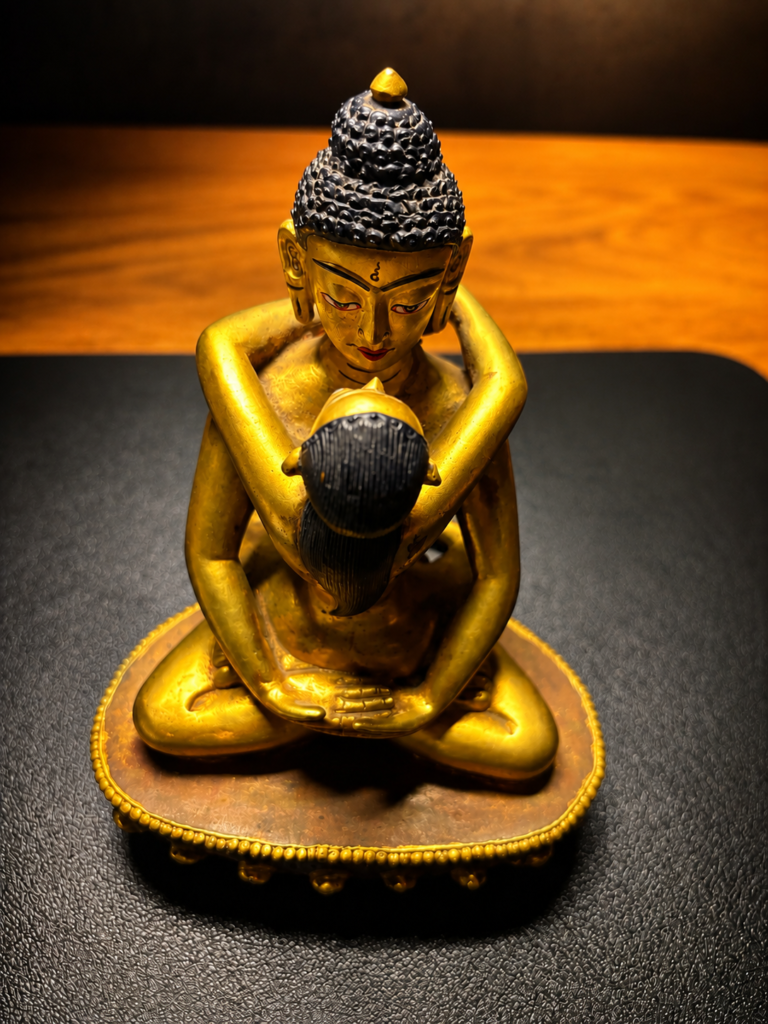
I bought this small sculpture in Lhasa, the capital of Tibet, which left me with a very bittersweet taste. At first glance it can surprise many visitors: two figures appear embraced in an intimate position. However, in Tibetan Buddhism this image is not intended to represent a sexual scene, but one of the deepest spiritual teachings of Vajrayāna.
His name is yab-yum, a Tibetan expression that literally means “father-mother”.
Much more than a couple
The male figure represents the method, compassionate action, the ability to act to alleviate the suffering of beings.
The female figure symbolizes the wisdom, direct knowledge of the true nature of reality.
separate, both are incomplete.
Compassion without wisdom can become a blind impulse.
Compassionate wisdom runs the risk of transforming into cold, sterile knowledge.
Only when both embrace the path to awakening appears.
A new way of understanding duality
In many traditions we find symbolic pairs.
In Hinduism they appear Shiva and Shakti.
In Taoism we find the Yin and the Yang.
In Tibetan Buddhism that same intuition takes a new form: the inseparable union between compassion and wisdom.
It is not about choosing one of the two paths.
Lighting is only possible when both remain united.
A psychological reading
This teaching is surprisingly current.
Many people have an enormous sensitivity towards the suffering of others, but lack the clarity necessary to really help.
Others understand human problems intellectually, but have lost the ability to be moved.
Maturity consists precisely in integrating both dimensions.
understand and love.
think and feel.
meet and care.
Three symbols, the same teaching
when contemplating Ardhanarishvara, , Kali and yab-yum, it is easy to think that they belong to different religious worlds. The first comes from classical Hinduism, the second from Tantric Hinduism, and the third from Tibetan Buddhism.
However, the more we delve into its meaning, the more evident it is that everyone points to the same truth.
Ardhanarishvara It teaches us that reality is born from the union between consciousness and energy.
Kali It reminds us that every transformation demands the death of what we no longer are.
yab-yum It shows that awakening is only possible when wisdom and compassion remain inseparable.
three images.
three cultures.
three different languages.
And yet, the same intuition: fullness never arises from choosing one extreme and rejecting the other. It is born when we learn to integrate what seemed opposite.
Perhaps that is one of the great teachings shared by the religions of the East. True wisdom does not consist in dividing the world between opposites, but in discovering the unity that remains hidden behind all dualities.
And perhaps that is also an invitation to our own life: stop fighting between the different parts of ourselves and begin to reconcile them.
Because in the end, Peace does not appear when a half expires, but when both discover that they were always part of the same reality.