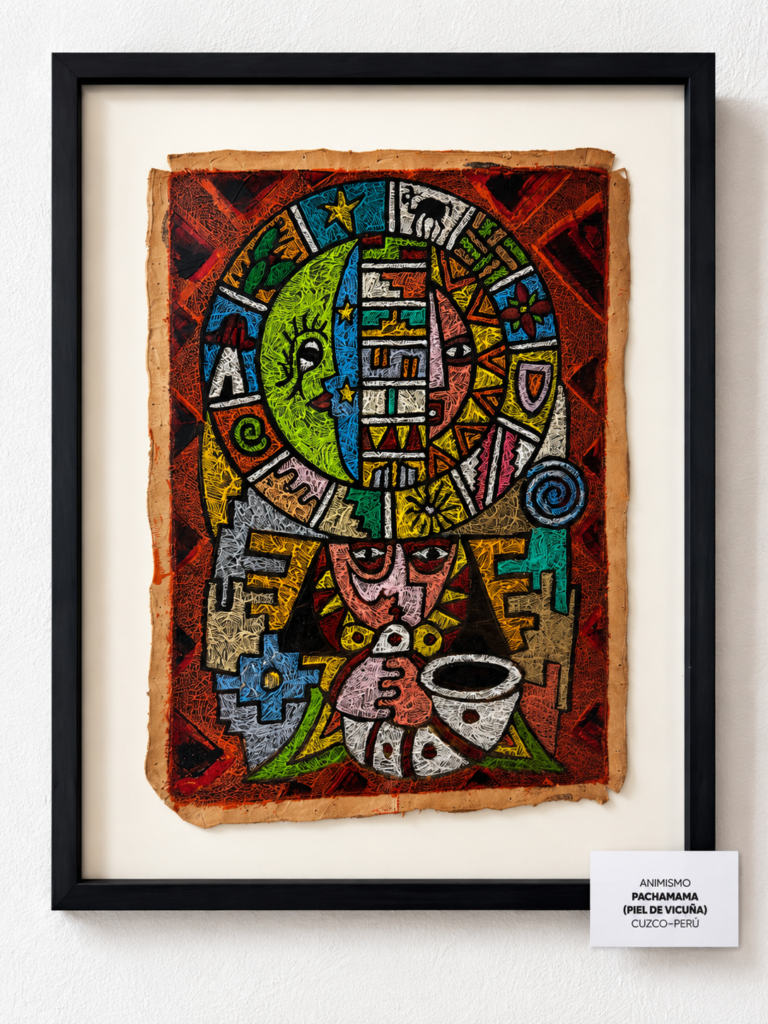
I bought this painting on vicuña hide in Cusco. It represents Pachamama, Mother Earth, one of the most profound figures in the Andean religious universe. When the Spanish arrived in the Andes, they found peoples who had spent centuries trying to answer the same questions that human beings had asked in Mesopotamia, Egypt, Greece, and India. How did the world begin? Where do we come from? Why do the sun, mountains, and death exist?In some ancient Andean cosmogonies, Viracocha appears, a creator figure who emerges in a still-dark world and gives shape to the sky, the sun, the moon, and human beings. Today we can read these stories and call them Inca mythology. But there's something that has always struck me when I travel: what for me is a myth, for someone else might be part of everyday reality.I think I began to understand it especially well in Ayacucho. Years ago, I had the opportunity to work there, helping victims of the terrible violence the region had suffered during Peru's internal armed conflict. Before going, I had read Among Neighbors by Kimberly Theidon. It's one of those books that stays with you because it questioned something that, as a psychologist, seemed fundamental to me: the idea that our Western psychological categories necessarily serve to explain everyone's suffering. The book featured the llakis. We could talk about depression, trauma, or post-traumatic stress. But there, suffering could be explained differently. The llakis didn't seem to belong solely to a person's mind. The pain was in the body, in what had happened, in the family, and in the community. And when I went to Ayacucho, I tried to remember that.
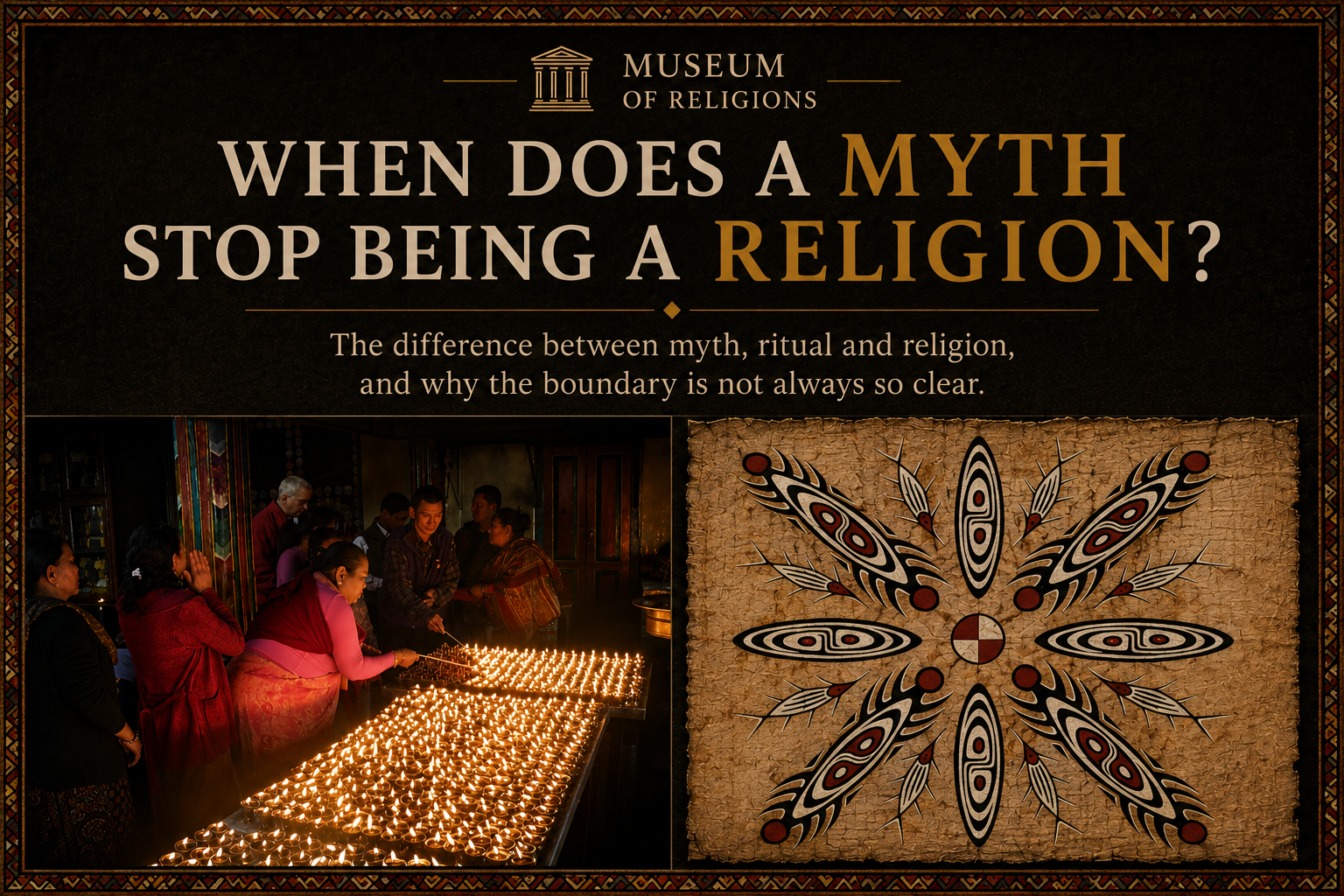
I arrived with my training as a Western psychologist, with my theories and diagnoses. But I didn't want to arrive telling them what to call their pain. I also remember talking to people who told me, with complete naturalness, about the apus, the mountain spirits. They didn't talk about them the way I might talk about Zeus or Poseidon. They weren't telling me an ancient Peruvian legend.They were talking about something that existed. And that's when I began to ask myself a question that has accompanied me on many of my journeys since. How much of what we call reality depends on the narrative from which we try to understand it? For me, the apus could be part of Andean mythology. For some of those people, the mountain was alive. I could talk about trauma. They could talk about llakis. And perhaps we were all trying to approach the same suffering from different narratives.The curious thing is that many of those people were also deeply Christian. They carried a cross. They prayed to the Virgin Mary. They celebrated the saints' feast days. And perhaps, before drinking, they would spill a few drops on the ground. There seemed to be no contradiction. Pachamama and the Virgin could coexist perfectly. The mountain spirit and the saint could protect the same village. A cross could be erected on a place that was already sacred long before anyone in those mountains had heard of Christ. And it was precisely while thinking about these things that a question began to linger in my mind: Where does mythology end and where does religion begin? Because I can read the story of Viracocha and call it a myth. But if a person organizes part of their life around that story, speaks to the mountain, asks its permission, or tries to understand its suffering from a worldview that is completely real to them… is it still mythology? Is myth simply a religion that has lost its believers? Or perhaps we call other people's stories myth and our own religion?
WHEN MYTH FASCINATES ME AND IS THEIR LIFE FOR OTHERS
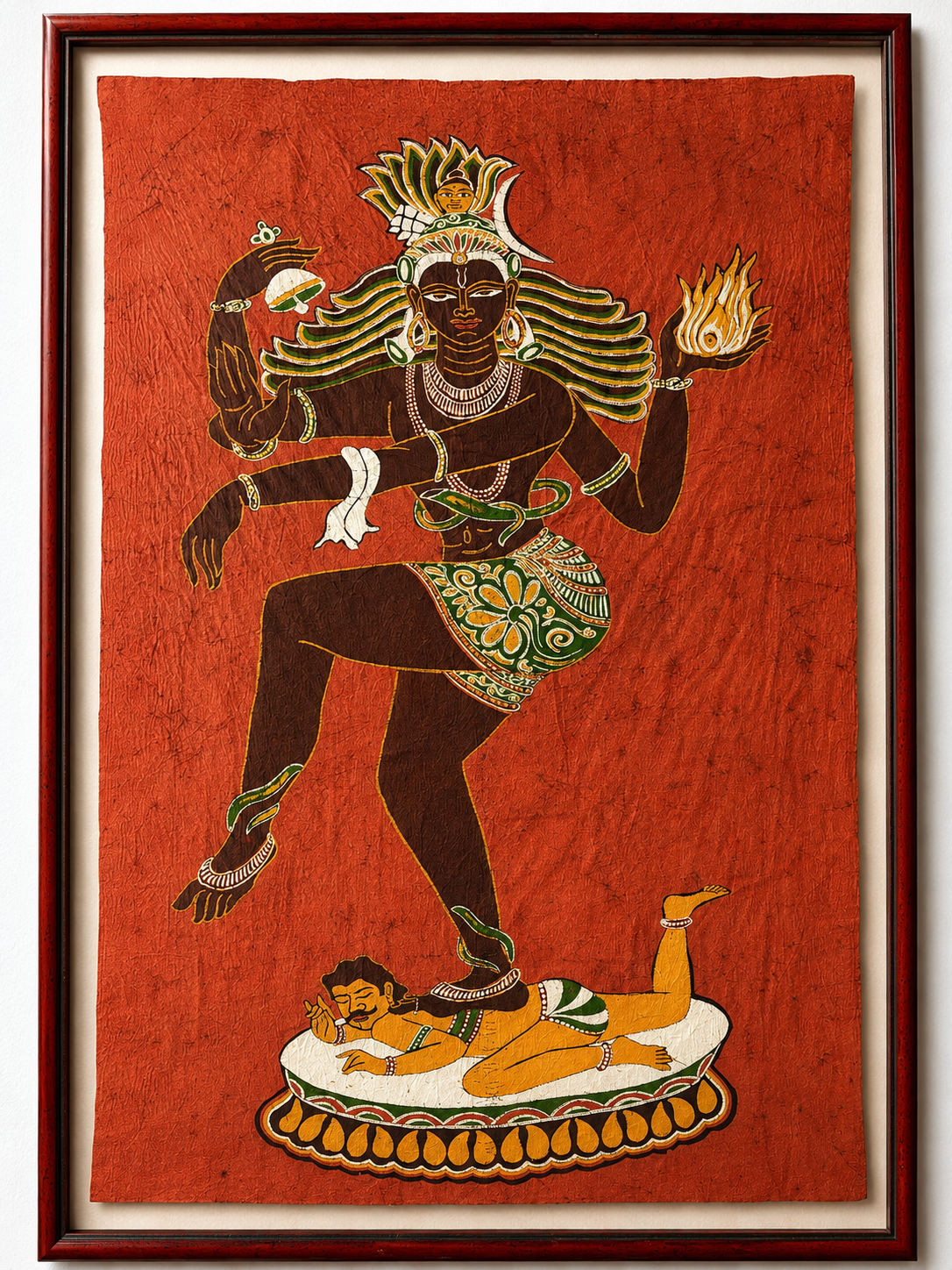
Many years later, the same question resurfaced. I had descended from Everest Base Camp and was back in Kathmandu, on another of my trips to the Himalayas. I sat facing the ghats and watched the bodies burn. I don't know how long I was there. The fire. The smoke. The families waiting. And all around, life continued with a naturalness that, to me, as a European, still seemed strange. I had come from the mountains. From walking for days among some of the highest peaks in the world, not so far—at least in my traveler's imagination—from another of the great sacred places of the Himalayas: Mount Kailash.According to Hindu tradition, Shiva dwells there. He meditates there. Eternally. I knew that story. Just as I knew the stories of Shiva and his connection to Varanasi. For me, they were fascinating tales. Mythology. But as I watched those bodies burn in Kathmandu, I remembered my first trip to India. I was 27 years old. I had arrived in Varanasi and sat down at the ghat where they cremated the bodies. There, at 27, I understood that what was mythology to me was, for the people in front of me, a way of understanding reality.In Varanasi, I felt that religion and death were deeply intertwined. Death was there, and life was also visible and palpable on the banks of the Ganges. Death wasn't hidden behind the doors of a hospital or a funeral home, as we so often do in Europe. And then I thought of Nataraja. Of Shiva dancing within a circle of fire. Creating. Destroying. Recreating.After that trip to Varanasi, I bought this Shiva cloth. It cost me ten dollars. I was 27, and I remember that, at that time, ten dollars didn't seem like a lot of money. I don't know exactly why, but that young man made a promise to himself. He thought that when he felt his own end was near, he would return to Varanasi. I wanted to return to that place. And to meet again the young man I once was."Many years have passed since then. And this Shiva cloth has been with me all this time..."
HOLY DEATH: COMPANION TO SOME, HERESY TO OTHERS
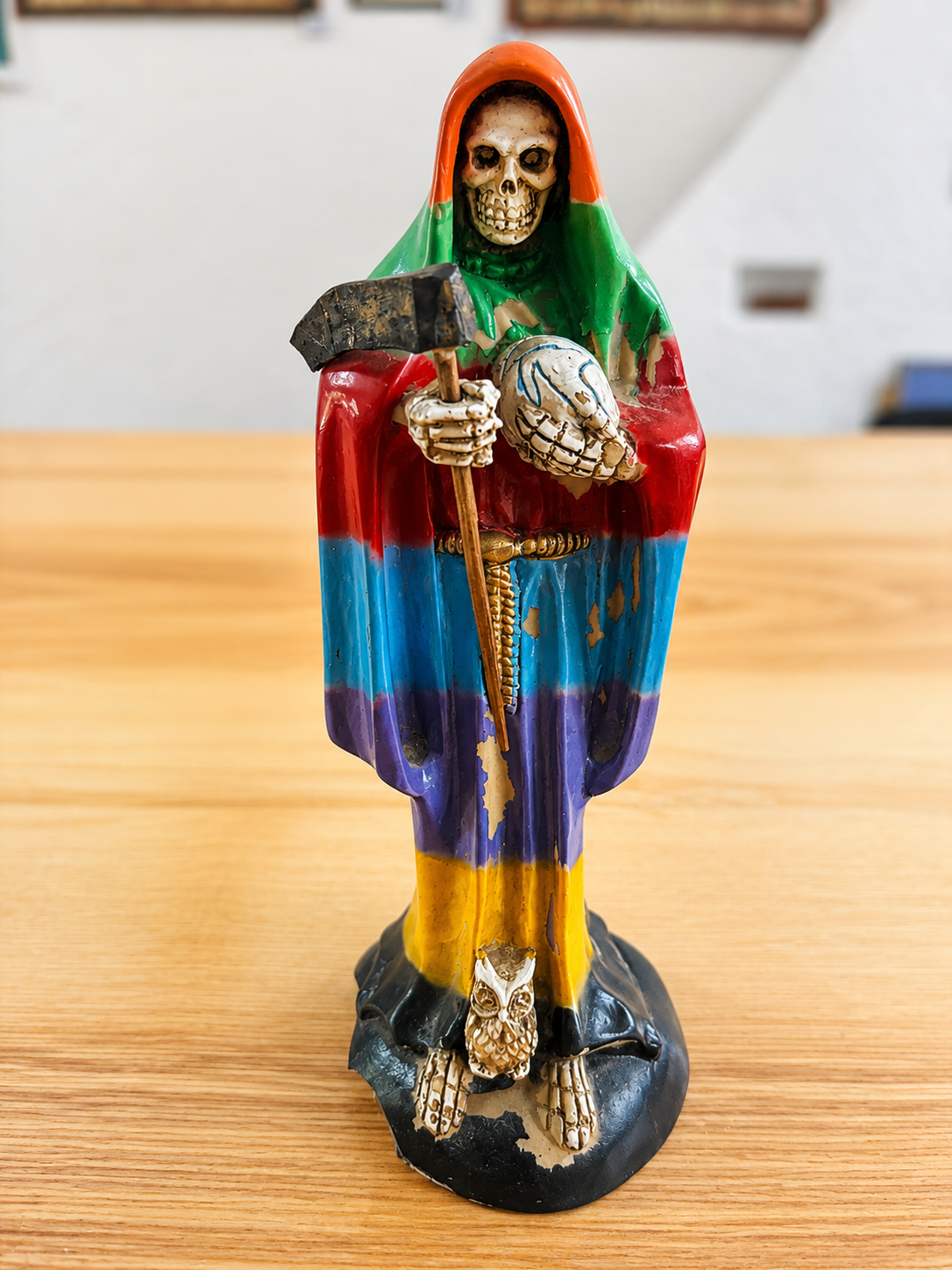
I want to end this journey in Puebla, Mexico. There, I entered a church that, at first glance, looked like any other Catholic church I'd visited in Latin America. There were Christs, Virgins, saints, candles, and flowers. But among them, skulls also appeared. And death.I bought this Santa Muerte right there. For some, she's a companion, a close presence to whom they speak, ask for protection, and confide their fears. For others, especially from the orthodoxy of the Catholic Church, her worship is heresy, a distortion of the Christian faith. But what fascinated me was finding her there, sharing the same symbolic space with Christs and Virgins.Because the religions we study in books seem to have very clear boundaries: Christianity, Hinduism, Buddhism, Indigenous religions. Real life is never so orderly. People mix symbols, inherit beliefs, transform gods, and seek protection wherever they feel they can find it. And Mexico is perhaps one of the places where this can be observed most clearly. In that church in Puebla, no one seemed concerned with resolving the contradiction. Christ was there. The Virgin was there. And Death, too. Perhaps because, for those who live accompanied by it, death ceases to be merely the end and can also become a presence.And I thought there was no better piece to end this tour. Because this museum doesn't try to decide which beliefs are true and which are false. It only tries to observe how, since the beginning of time, human beings have needed to give shape to our fears, our hopes, and that which we cannot understand. And, sometimes, the boundaries that separate a saint from a heresy depend simply on who is looking.