BUDDHA. FROM MAN TO GOD
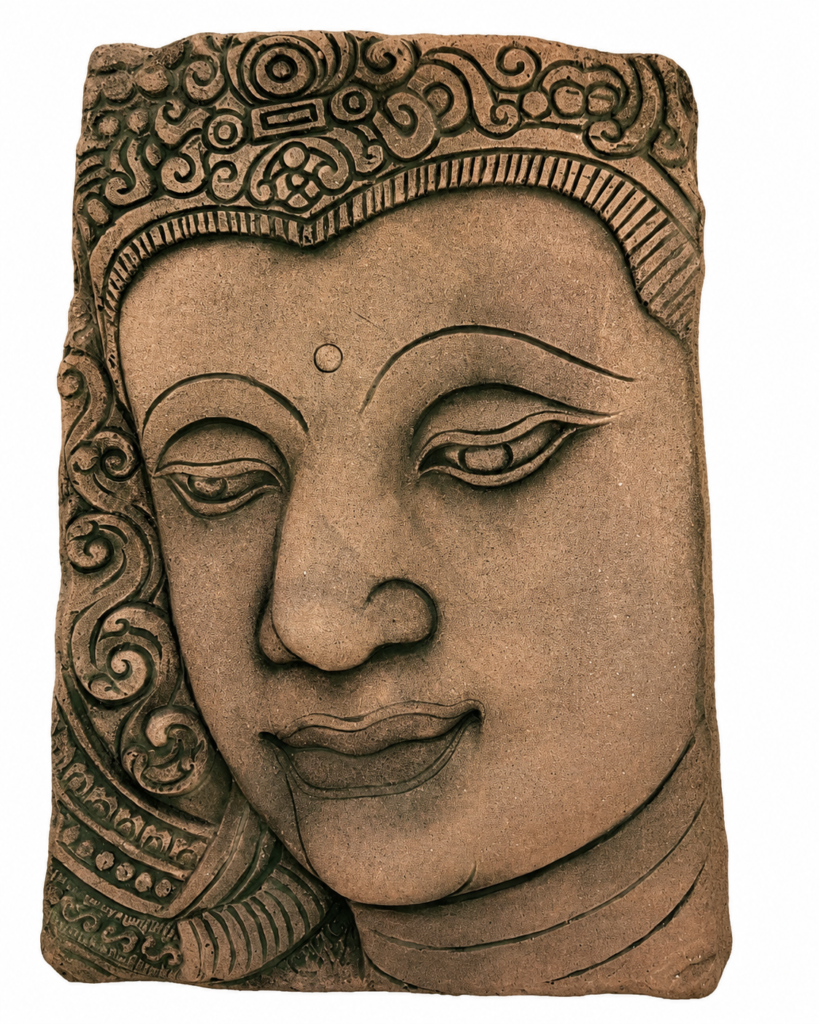
When we travel through Asia we find Buddha images everywhere. Some are austere and almost naked. Others are surrounded by gods, demons, bodhisattvas, and supernatural worlds.
And I have always been fascinated by the same question: How could the same figure change so much?
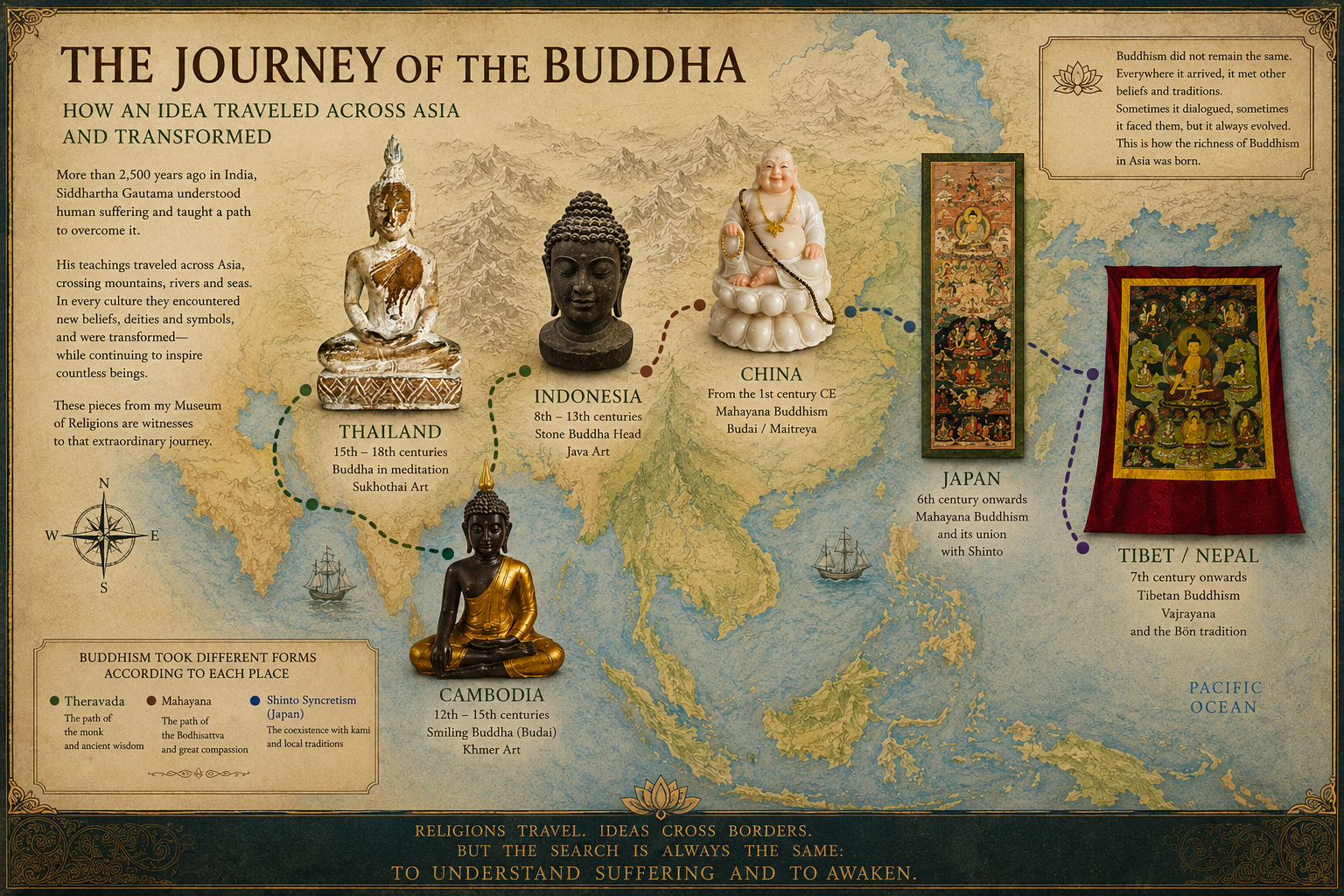
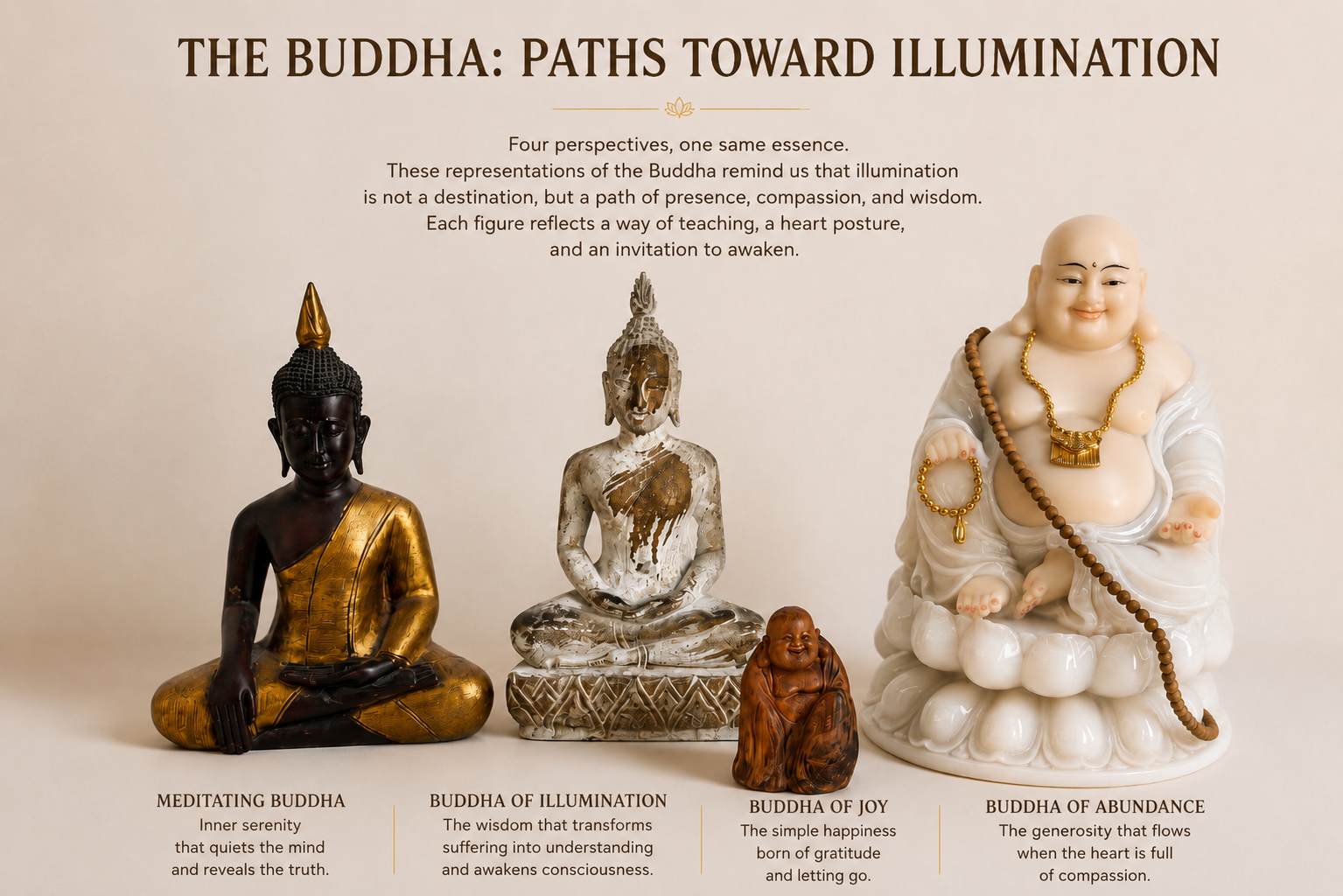
In the Museum of Religions I have many representations of Buddha, collected in different trips and places. When looking at them together we can go through, almost without realizing it, the very history of Buddhism.
And maybe we should start at the beginning.
BUDDHA BEFORE HE WAS BUDDHA: THE BOY WHO HAD EVERYTHING
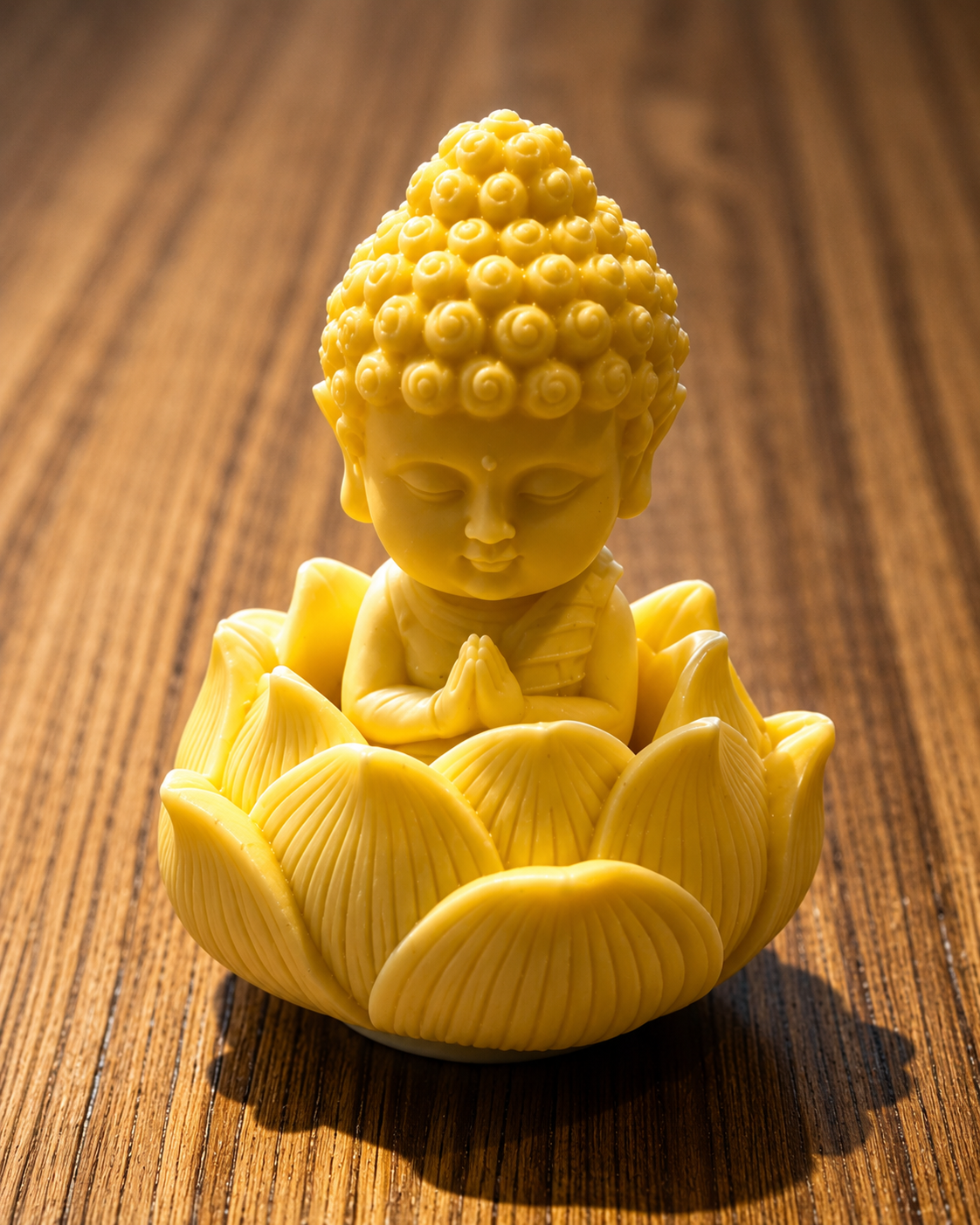
I bought this little Buddha in Wuhan During one of my trips to China.
It is made, as they explained to me, from a seed or vegetable fruit whose name, to be sincere, I no longer remember. Maybe one day I’ll be able to identify it. It caught my attention precisely for this reason: because of its simplicity and because of that almost naive image of a child Buddha sitting on a lotus flower.
But Buddha was not born as a Buddha.
Before being “the awake” was Siddhartha Gautama.
Tradition tells that he was born into a noble family. His father, fearing that the prophecies that announced a spiritual life were fulfilled, tried to protect him from everything that could make him discover suffering.
Siddhartha grew up surrounded by comforts.
No disease.
No old age.
No death.
Or, better said, without seeing them.
And this has always seemed to me one of the most fascinating parts of Buddha’s history. Because his father tried to do something deeply human: to build around his son a world in which pain did not exist.
But hiding the suffering does not make it disappear.
One day Siddhartha came out of that protected world and, according to tradition, he met an old man, a sick man and a corpse.
discovered old age.
the disease.
death.
And he understood something that would change his life: All this would also happen to him and the people he loved.
Then he did something difficult to understand from our current perspective.
He left everything.
your position. your comfort. his palace. And also to his family.
For years he sought a response to suffering through teachers and extreme asceticism. Until he understood that destroying the body did not necessarily lead to liberation.
He sat under a tree.
and decided to watch.
Maybe that’s why I like this little figure I bought in Wuhan so much.
because when I look at her I think that Buddha was not born awake.
Before, he had to live protected within a reality built by others.
And then he had to get out of it.
Maybe awakening is precisely that: dare to look at what for years we have needed not to see.
THE BUDDHA I FOUND IN CAMBODIA AND THAILAND
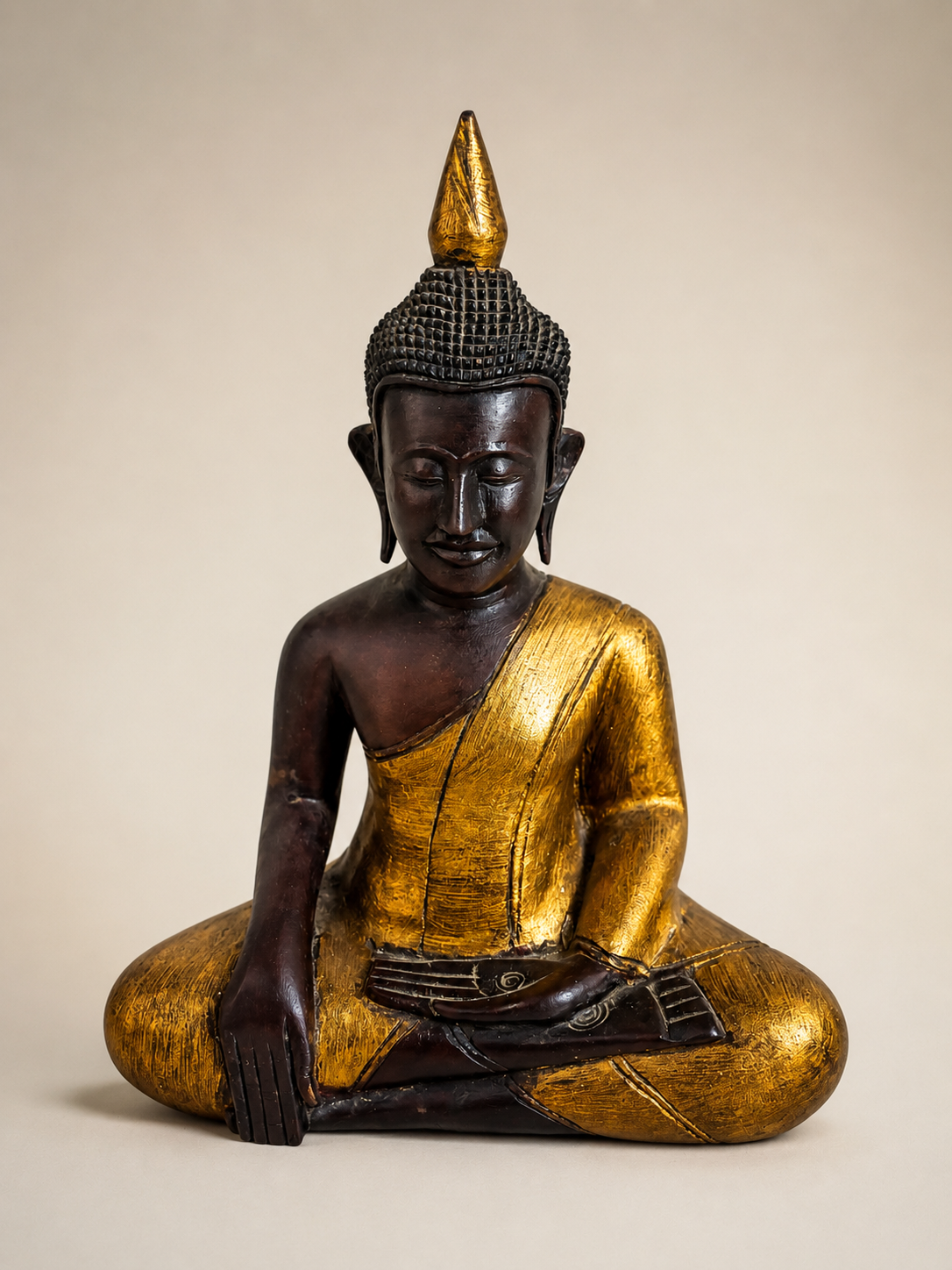
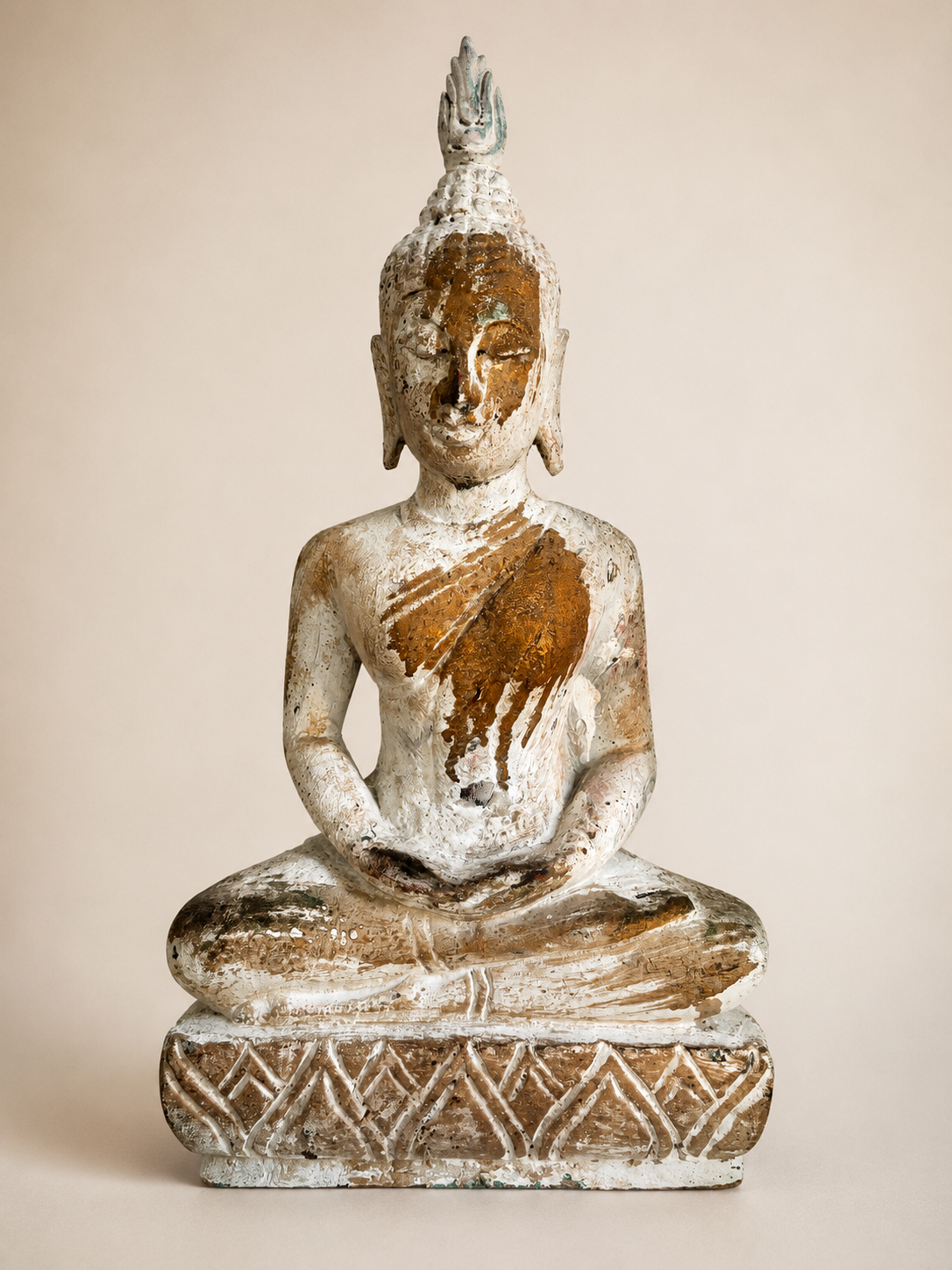
years after learning about the history of Siddhartha, traveling through Cambodia and Thailand, I began to meet Buddha everywhere.
in the temples. in the ruins. under the trees. covered with gold. worn by centuries of rain.
And yet there was something that was repeated.
Buddha was almost always alone.
This is important to understand one of the great branches of Buddhism.
For a long time in the West we have talked about Hinayana Buddhism, the “small vehicle”. Today I prefer to use the term Theravada, the “old doctrine”, because Hinayana It was a denomination used by other Buddhist currents and ended up acquiring a derogatory sense.
In Theravada, Buddha is not the creator god of the world.
It is A man who found a way.
And perhaps that is why his images give me a feeling so different from what I would later find in Tibet.
Here we do not yet see that multitude of divinities, demons, bodhisattvas and supernatural beings that will fill the universe of Mahayana Buddhism and, especially, Tibetan Buddhism.
We see Buddha.
Sitting.
Meditating.
in silence.
The objective of the path is to understand the Four Noble Truths: there is suffering; Suffering has a cause; can cease; And there is a way to achieve it.
That path is the Noble Eightfold Path.
And the ideal is the Arhat: One who, following the teachings of Buddha, manages to free himself from the cycle of suffering.
When I look at my photographs of Cambodia and Thailand, I understand something better than in the books it is much more difficult to perceive.
Religions also speak through their images.
The Theravada Lonely Buddha seems to tell us:
I found the way.
Now you must go through it.
But when Buddhism continued to travel to China, Korea and Japan, something extraordinary happened.
The individual path began to seem insufficient.
A new question appeared:
Can someone attain liberation and leave everyone else behind?
And from that question will be born one of the characters that fascinates me the most of the entire history of religions:
The Bodhisattva.
And with him begins the Mahayana Buddhism.
THE BUDDHA OF BOROBUDUR
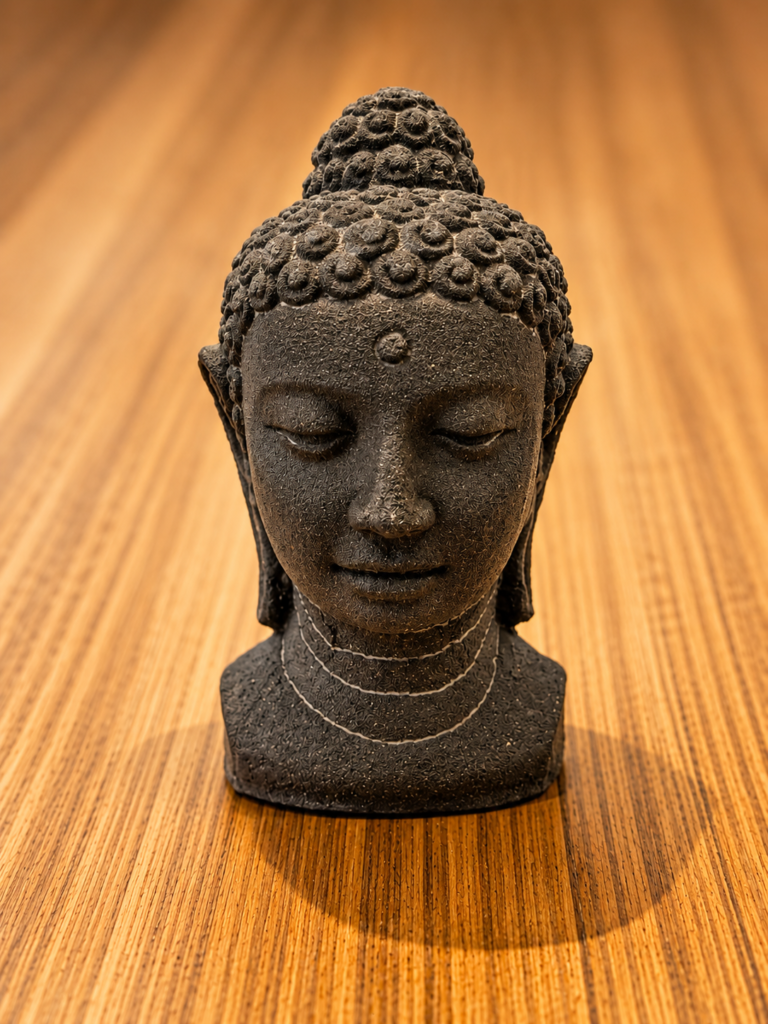
I bought this Buddha head during my trip to Indonesia, in Borobudur.
I remember going through that huge temple and finding images of Buddha over and over again. Sitting, silent, looking out from the terraces of the monument.
Borobudur is one of those places that help to understand something that has always fascinated me: Religions do not live isolated.
We are in Java. A short distance away Prambanan, one of the great Hindu complexes in Southeast Asia.
Buddha and Shiva.
Buddhism and Hinduism.
Two great traditions living together for centuries in the same territory.
And perhaps that is why, when we travel following religions, the borders that appear so clear in the books begin to blur.
Buddhism was born in India and inevitably inherited part of the cultural universe in which it emerged: karma, samsara, reincarnation and the search for liberation.
But Buddha proposed a different path.
He didn’t ask so much who created the world.
He asked something much more immediate:
Why do we suffer?
This head that I brought from Borobudur reminds me of precisely that.
eyes closed.
the look inward.
Because, for Buddha, the great journey does not begin through the world.
Begin by observing your own mind.
And from here I would link directly with The Four Noble Truths and Theravada. I think we can also use the photo of your Buddha head as a transition image between Siddhartha’s life and the explanation of his teaching.
THE BUDDHA WHO GAINED FAT AND BEGAN TO LAUGH
When we travel through China, we often encounter this image: a fat, smiling man with an enormous belly and an almost contagious expression of happiness. I myself have several figures in the Museum. I brought these two back from China. And for years, like almost all Westerners, I called him "the fat Buddha." But there's a small problem. This isn't Buddha.
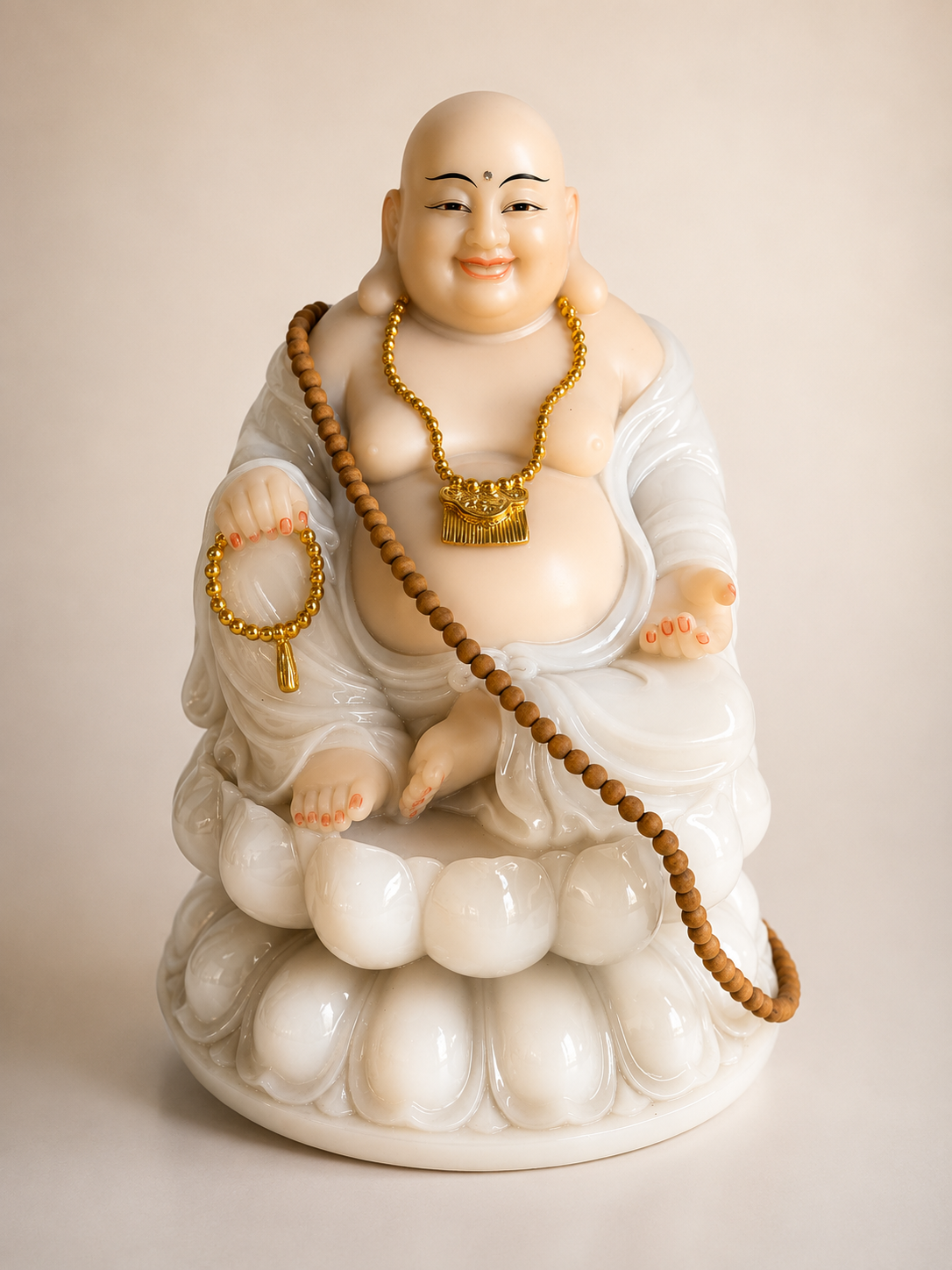
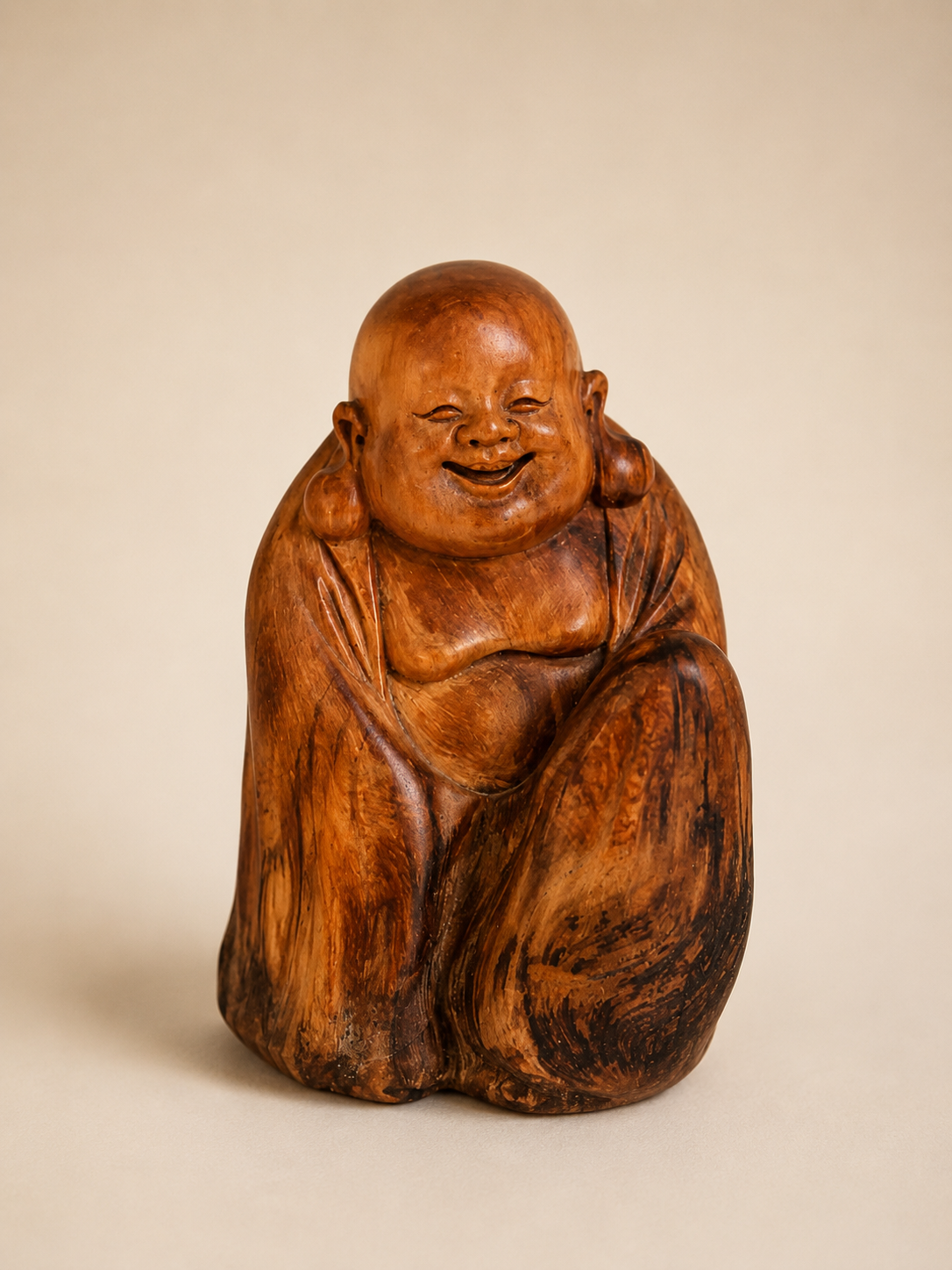
Or, at least, it is not Siddhartha Gautama, the man who left his palace, meditated under a tree and tried to understand the origin of suffering.
So… who is it?
His name is Budai.
Tradition relates it to a Chinese monk who had lived around the 10th century. He was depicted walking with a large sack—in fact, Budai It means something similar to “clothing bag”—and over time it began to be associated with joy, abundance and generosity.
But something even more interesting happened.
Budai ended up being considered a manifestation of Maitreya, the Buddha of the future.
And here we begin to understand the enormous transformation that Buddhism underwent when it left India.
Buddhism Mahayana, the “Great Vehicle”, developed a much broader religious universe.
It was no longer just about following the Buddha’s path to achieve one’s own liberation.
The figure of the Bodhisattva: One who, being able to achieve definitive liberation, remains linked to the world to help other beings to wake up.
I have always been fascinated by this idea.
I don’t save myself. wake up together.
THE BUDDHA WHO GAINED FAT AND BEGAN TO LAUGH
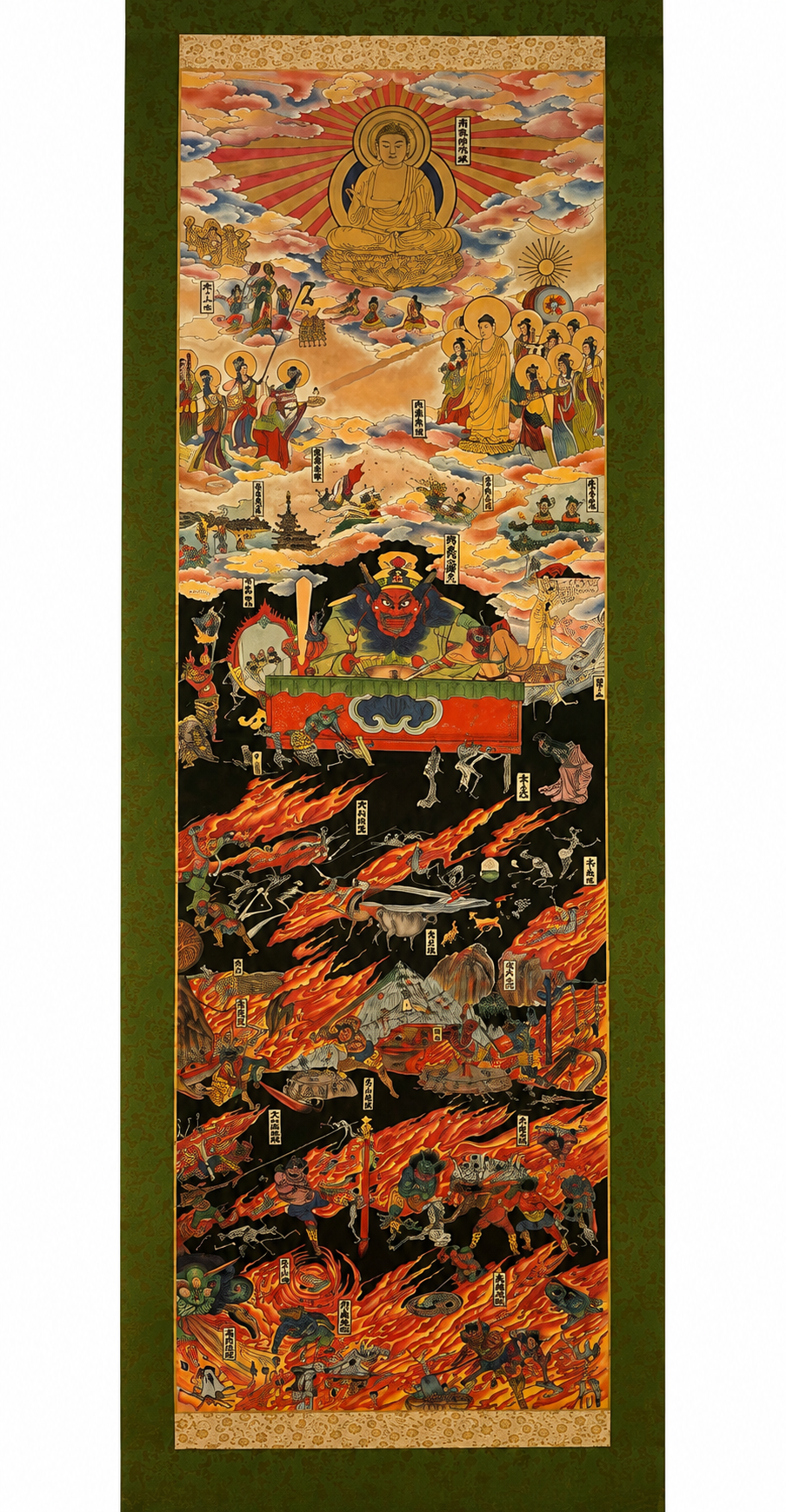
I bought this great vibe in Kyoto.
I remember it caught my attention for a very simple reason: Above everything seems luminous; Below, the world burns.
At the top we find Buddha and the worlds associated with salvation. Below are human beings, judges and supernatural figures. And finally we come to hell: fire, punishments, demons and beings trapped in the consequences of their own actions.
The Japanese Buddhist tradition developed these images with enormous force. The contrast between the horrors of the six renaissance kingdoms and the Hope of the Pure Land of Amida was especially important in Japanese medieval Buddhism..
But when I bought this piece in Japan I thought of something that still fascinates me.
None of this was born in Japan.
Buddha had lived in India.
Buddhism traveled.
He crossed China and Korea.
And finally he arrived in Japan.
But Japan already had gods.
Or, to be more exact, I had Kami.
The mountain could be sacred. a forest. a rock. a river an ancestor. The presence of the sacred inhabited the world.
It was the universe of Shintoism.
And when Buddhism arrived, something happened that we found again and again in the history of religions.
The Japanese did not necessarily say:
For centuries they tried to make both universes coexist. Kami and Buddhas were interpreted and related within a long process of syncretism known as Shinbutsu Shūgō. That coexistence was so deep that temples and sanctuaries came to share spaces and cults; The official separation between Buddhism and Shintoism was promoted by the Meiji government from 1868.
And this is passionate about me.
Because we tend to study religions as separate compartments.
Buddhism.
Hinduism.
Shinto.
Christianity.
As if each one had been born inside a closed box.
But religions travel.
And when they travel they meet the gods who were already there.
They reinterpret them.
they absorb them.
Sometimes they fight them.
And other times they discover that they can coexist.
When I look at this roll that I brought from Kyoto I no longer see only heaven and hell.
I see The journey of an idea.
A teaching born in India that crossed Asia and, upon arriving in Japan, had to learn to live with sacred mountains, spirits and kami.
Perhaps Joseph Campbell He was right to invite us to look at the myths beyond their borders.
Because the more I study religions, the more difficult it is for me to find a completely pure tradition.
Religions, like us, build their identity in meeting others.
WHEN BUDDHA REACHED THE SUMMITS OF THE HIMALAYAS
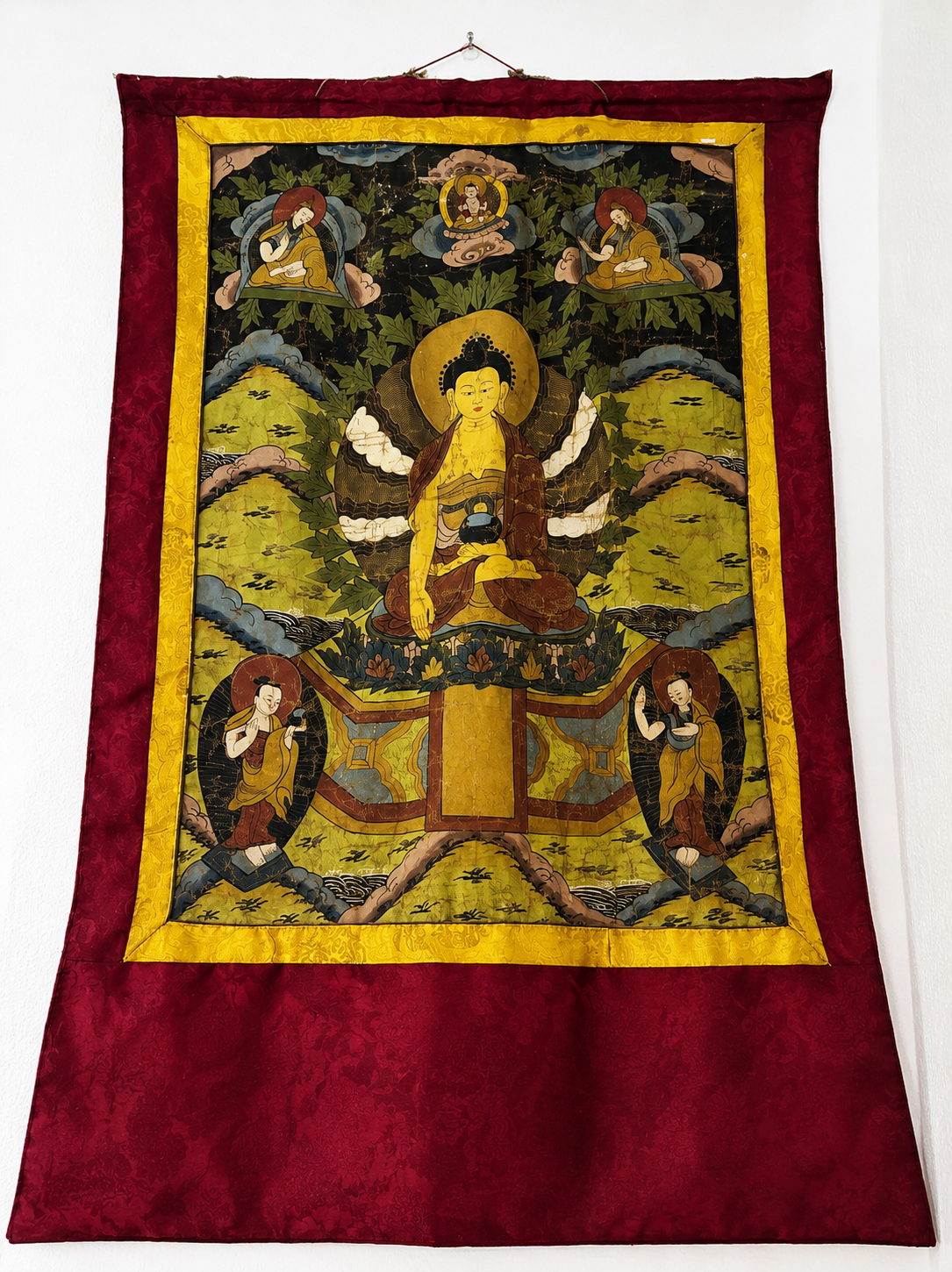
I bought this thangka in Nepal.
For years it has been hanging in my religions museum and, every time I look at it, I think about the enormous journey that Buddhism had to make to get here.
It had all started with a man.
Siddhartha.
A man who abandoned a protected life because he discovered disease, old age and death.
His question was apparently simple:
Why do we suffer?
But then Buddhism began to travel.
In Southeast Asia I found the silent Theravada Buddha.
In China, the Mahayana broadened the path and bodhisattvas appeared with enormous force, beings who give up definitive liberation to help awaken others.
In Japan, Buddha had to learn to live with the Kami and with the ancient universe of Shintoism.
And finally we arrived in Tibet.
Something happened here that fascinates me.
Buddhism was filled with gods.
Or, at least, that’s what it looks like when you first contemplate a Tibetan Thangka.
Buddhas.
Bodhisattvas.
teachers.
protectors.
peaceful beings.
terrible beings.
Figures with multiple arms, enraged faces, fire, skulls and symbols that seem to be light years away from that man sitting under a tree.
What had happened?
Tibetan Buddhism inherited the Mahayana and the sophisticated Tantric practices of Late Indian Buddhism. But, when he settled in Tibet, he also lived with local cults and divinities; Different academic sources describe the incorporation of numerous local deities into the Tibetan Buddhist universe.
And here comes the old tradition Bon.
I don’t like to simply say that “Buddhism copied the Bön”, because the story is much more complex. There was contact, tension and mutual influence. Even Bön’s own historical definition is the subject of debate..
But something deeply human happened.
The ancient sacred beings did not disappear.
Many were reinterpreted.
Some local divinities came to occupy a place within the new Buddhist universe.
and the tantric practices that came from India provided rituals, visualizations and extraordinary symbolic wealth. Tibetan Buddhism maintained a particularly strong relationship with the traditions of Indian Buddhism.
That’s why a thangka like this may seem so different from the little Buddha I bought in Wuhan.
But perhaps, deep down, the question remains the same.
What do we do with our suffering?
What changes is language.
Siddhartha spoke of attachment.
China spoke of the compassion of the bodhisattva.
Japan filled the road with new religious landscapes.
And Tibet turned the mind into an immense symbolic universe.
Maybe that’s why I’m so passionate about religions.
Because the more I travel and the more I study them, the less I believe in pure traditions.
religions meet.
They mix.
They face.
are absorbed.
And they transform.
as I said and showed over and over Joseph Campbell By comparing the myths of very different cultures, Under different images great human questions reappear.
I look at this thangka that I brought from Nepal and I think we have traveled thousands of kilometers from that protected child in a palace.
But the question remains there.
Why do we suffer and how can we wake up?
And perhaps the whole history of Buddhism is, deep down, the story of the different answers that human beings have given to the same question.
End of the trip. Or perhaps, as Buddha would say, the beginning.