Ganesha
wisdom and prosperity
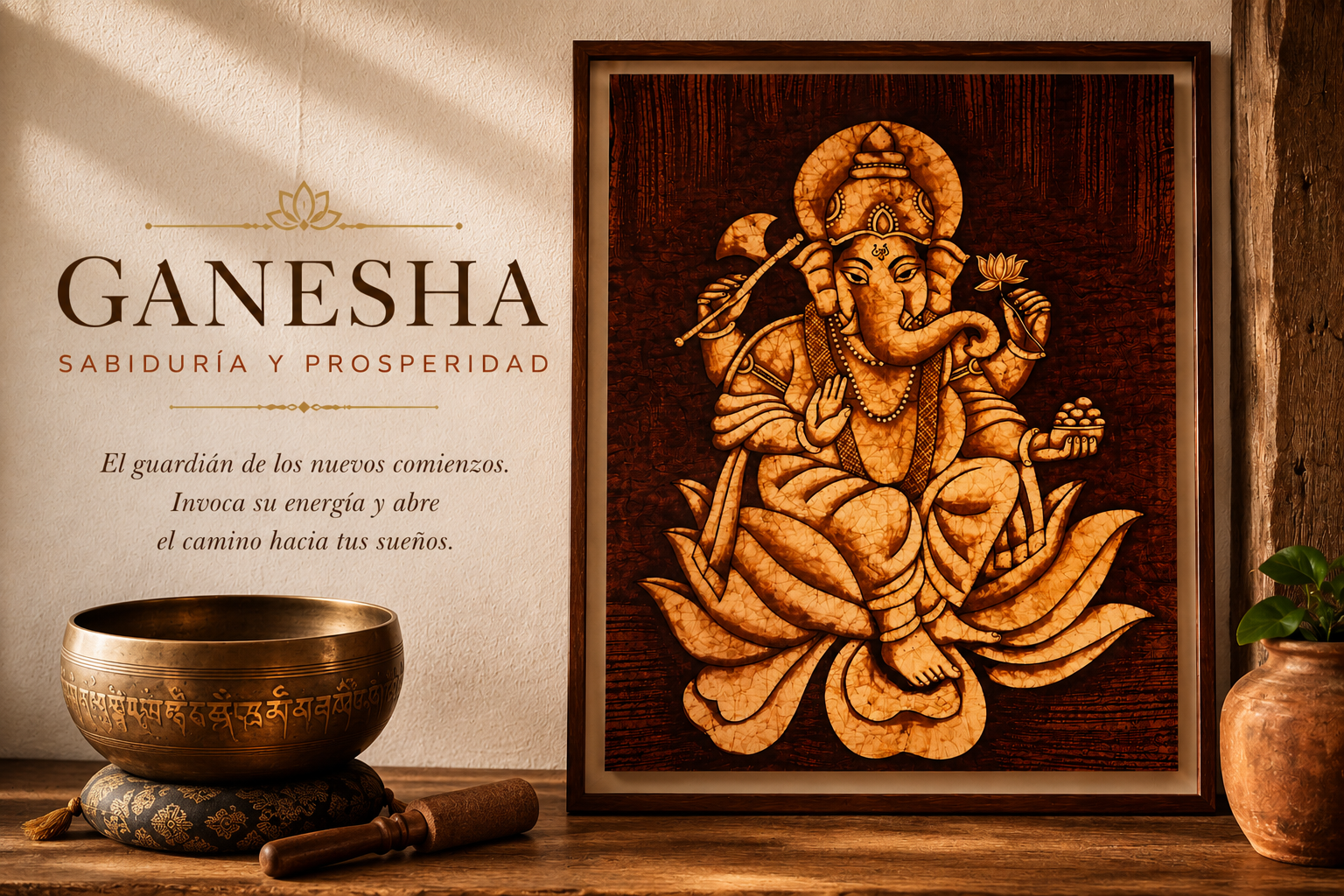
There are objects that one buys and there are objects that, in some way, they are the ones who choose us.
this image of Ganesha came into my life during my Second trip to India, around 1994. At that time I traveled with a very tight budget and had found a way to extend my travels: I bought local crafts to sell later in Spain and, with that money, finance the next adventure.
It was a way to continue discovering the world when traveling was not as simple as today.
Most of the pieces soon found a new home. However, some never went on sale.
This was one of them.
I remember seeing her for the first time and feeling that she was transmitting something special, since Ganesha is one of my favorite Hindu gods. It was not only an artistic representation of one of the most beloved deities of Hinduism; There was a serenity difficult to explain in her. Without thinking too much, I decided that he would return to me and that he would not be part of the pieces intended for sale.
More than thirty years have passed since then.
He has survived moves, house changes, new trips, and hundreds of subsequent acquisitions. today occupies a place in the museum of religions, where he keeps reminding me of that young man who toured India with a backpack, a lot of curiosity and the desire to understand other ways of understanding the world.
Shiva and Parvati's son
In the Hindu tradition, Ganesha He is the son of Shiva, symbol of transformation, and Parvati, Representation of creative energy, love and fertility.
Its history is one of the best known in Indian mythology.
Legend has it that Parvati modeled a boy with sandalwood paste from his own body and gave him life to watch over the entrance while she took a bath. When Shiva returned, the boy, not knowing who he was, prevented him from passing. In an outburst of anger, Shiva cut off his head.
Discovering that he had killed Parvati’s son, he promised to bring him back to life. His followers found the first living being slept with his head facing north: a young elephant. Shiva placed that head on the child’s body and thus Ganesha was born.
Since then he has been named lord of beginnings and Obstacle remover, becoming one of the most revered divinities in India.
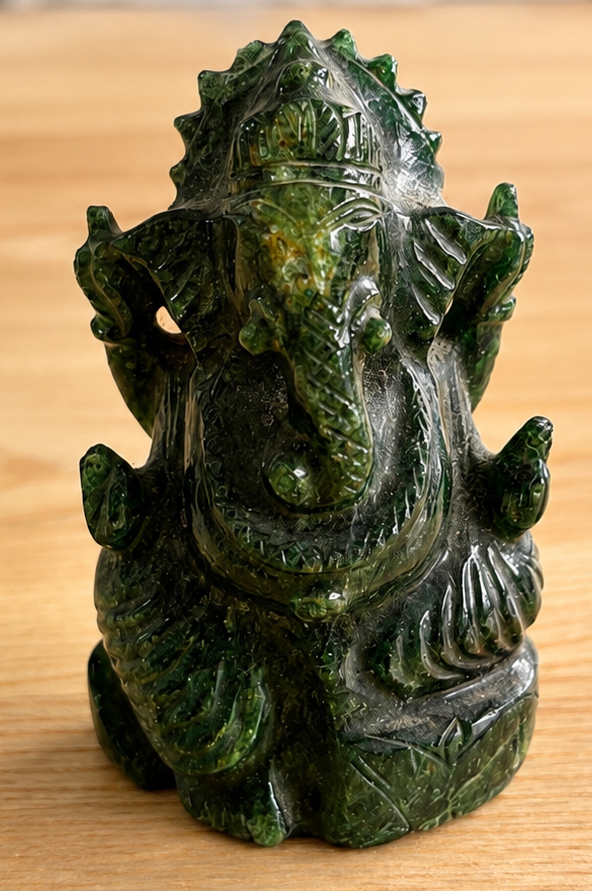
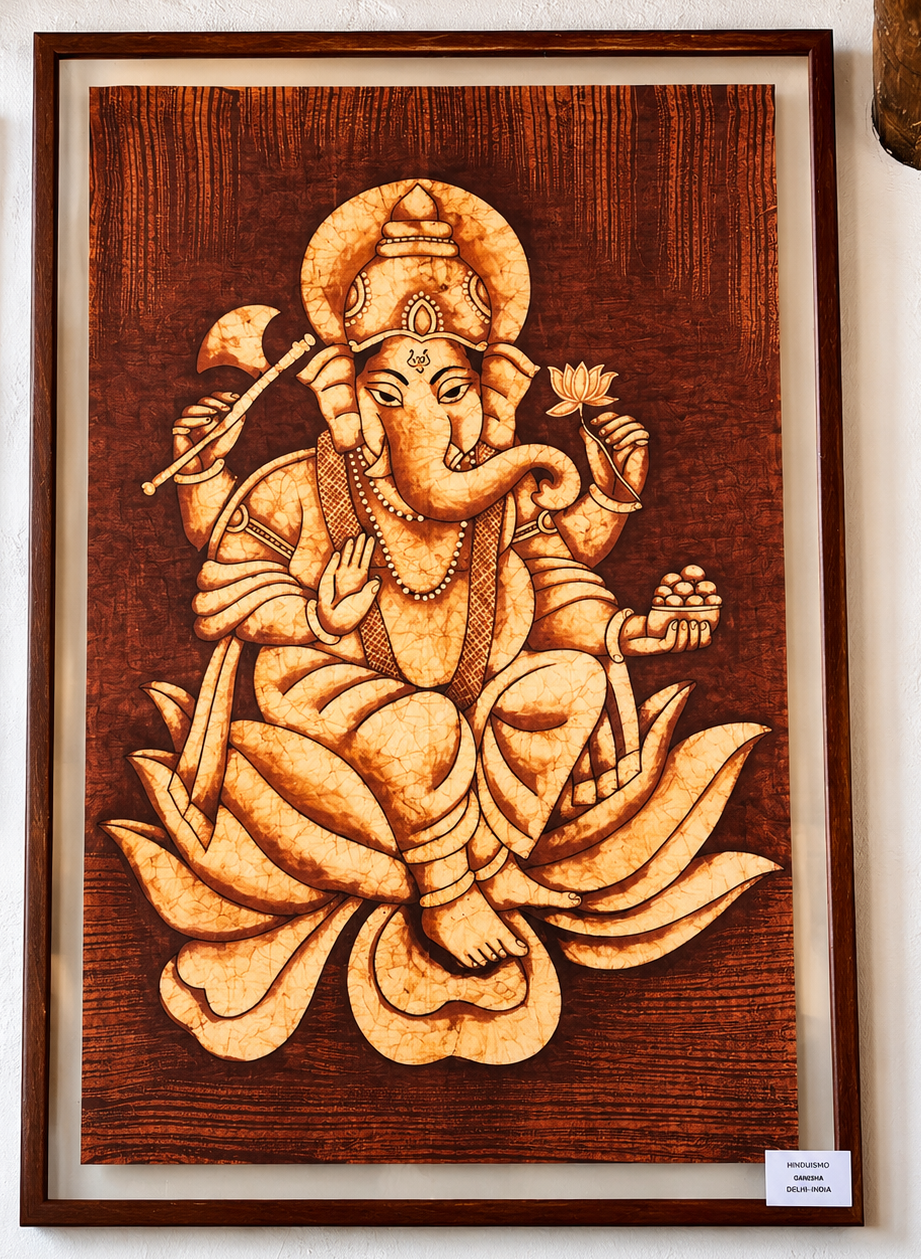
This is a piece of the Serpentine Museum. In the Hindu tradition, Ganesha He is the son of Shiva, symbol of transformation, and Parvati, Representation of creative energy, love and fertility.
Its history is one of the best known in Indian mythology.
Legend has it that Parvati modeled a boy with sandalwood paste from his own body and gave him life to watch over the entrance while she took a bath. When Shiva returned, after many years, meditating on Mount Kailash, the boy, without knowing who he was, prevented him from passing. In an outburst of anger, Shiva cut off his head.
Discovering that he had killed Parvati’s son, he promised to bring him back to life. His followers found the first living being slept with his head facing north: a young elephant. Shiva placed that head on the child’s body and thus Ganesha was born.
Since then he has been named lord of beginnings and Obstacle remover, becoming one of the most revered divinities in India.
Ganesha's symbolism
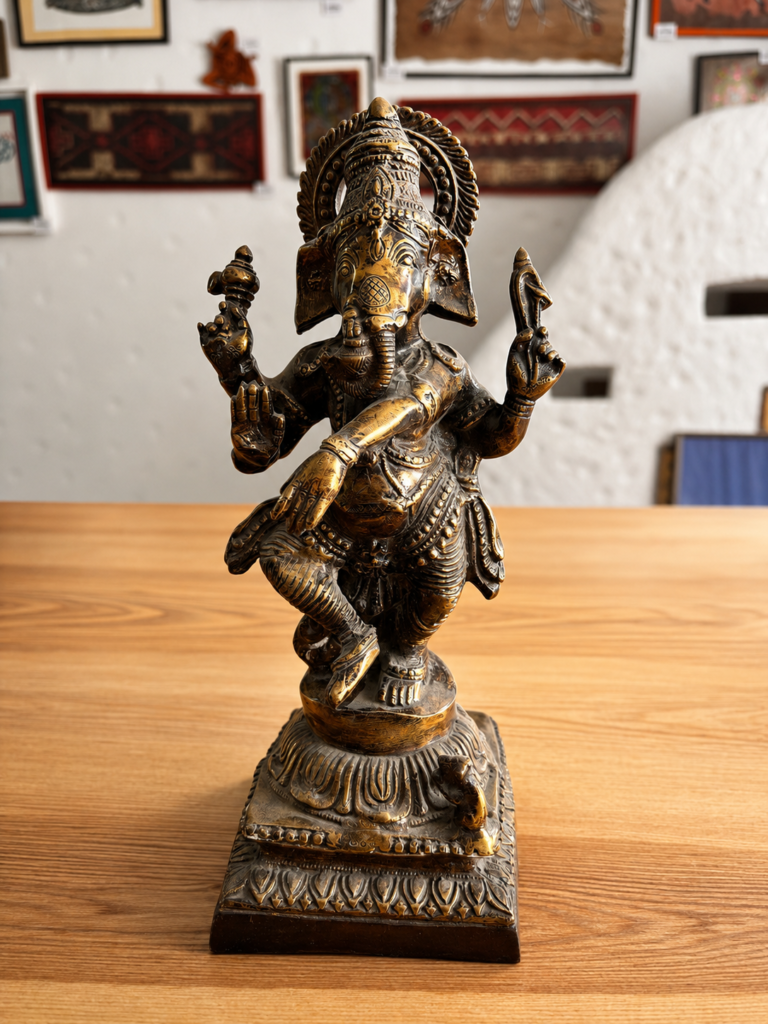
Each part of its iconography contains a teaching.
- the elephant head It represents wisdom and intelligence.
- The big ears They remember the importance of listening before speaking.
- The little mouth Invite to speak wisely.
- the trunk, capable of uprooting a tree or picking up a flower, symbolizes the fortress attached to sensitivity.
- the lotus It expresses the purity that can bloom even in the middle of the mud.
- The sweets (modaks) They represent the reward of effort and inner growth.
- the axe It symbolizes the ability to cut attachments that prevent us from moving forward.
- And the mouse, your vehicle, remember that even the smallest and apparently insignificant desires can dominate us… or become allies when we learn to guide them.
Pieces that remind me of my story
When I look at these images I no longer see only a representation of Ganesha.
I see the Indian markets of the 1990s, the endless trains, the conversations with the artisans, the smell of incense and spices, and that illusion of discovering a world completely different from mine.
Without knowing it, those first purchases were also the origin of something much greater.
decades later they would end up becoming the embryo of this museum of religions, a project born from the conviction that knowing the beliefs, symbols and stories of other cultures helps us, above all, to better understand our own humanity.