The Shiva Temple at Pokhara: a viewpoint among the Himalayas
I took this photograph during my second trip to Pokhara, the second most important city in Nepal and one of the most beautiful places in the country. located on the shores of the lake Phew And with the impressive mountain range of Annapurna as a backdrop.
It is a city that I have a lot of affection for because there ends my 14-day trel only for the Himalayas doing the Annapurna trek one of the most beautiful and spiritual experiences of my life.
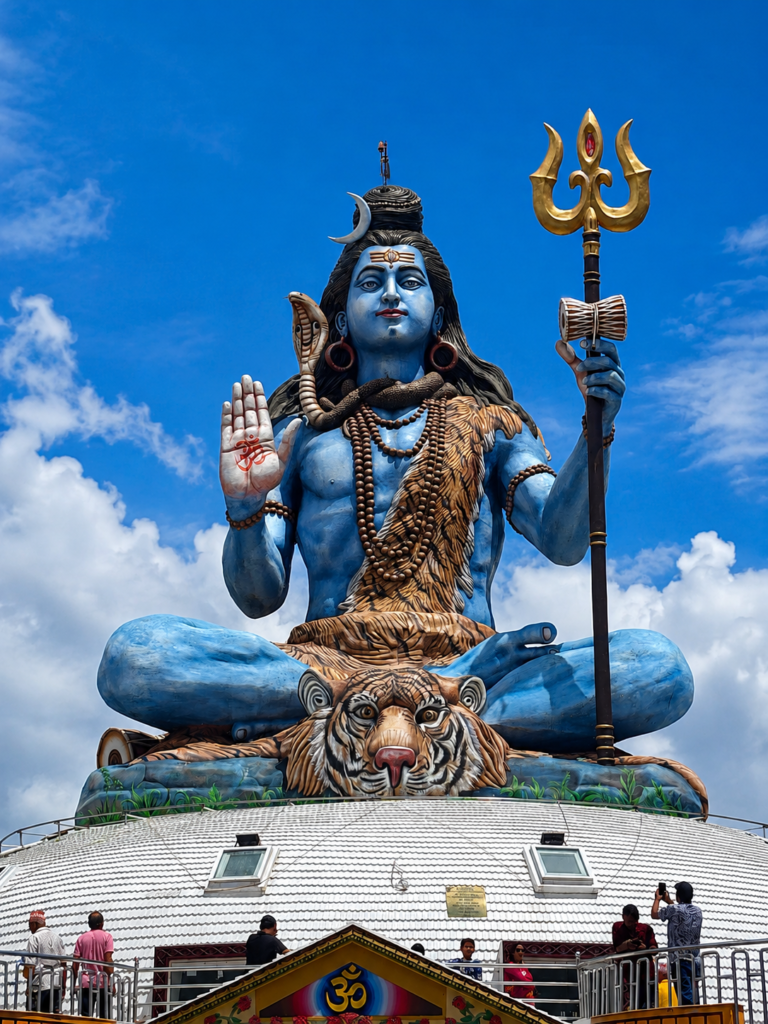
This photo is from Pumdikot Shiva Temple, recently opened on a hill located at about 1,500 meters of altitude. From this place you get magnificent views of Lake Phewa, the city and, when the sky is clear, of some of the highest mountains on the planet.
The protagonist of the enclosure is the gigantic statue of Shiva, of approximately 51 feet (about 15.5 meters) high, seated on a pedestal of several meters that elevates the assembly until it exceeds the 30 meters. It has become one of Nepal’s largest Shiva depictions and an important pilgrimage site for the Hindu faithful.
The image shows Shiva sitting in deep meditation. In one hand he holds the Trident (trishula), symbol of its power and of the three fundamental aspects of existence: creation, conservation and transformation. Around him appears the snake, which represents dominance over fear and death, while crescent moon Above his head he recalls the cyclical character of time and life.
What most impresses the visitor is not only the size of the statue, but the serenity it transmits. Surrounded by the Himalayan mountains, it is easy to understand why Shiva is considered the great yogi, the master of meditation and inner transformation.
For me, visiting this place was much more than contemplating a monument. It was an opportunity to understand how, in Nepal, spirituality continues to be part of everyday life. While hundreds of pilgrims offered flowers, prayed or simply remained silent in front of the statue, I understood that the great religious images not only intend to impress by their size, but also remind the visitor of what they represent.
In an environment as majestic as Pokhara, Shiva seems to invite at the same time to look up towards the mountains and direct it towards the interior of oneself.
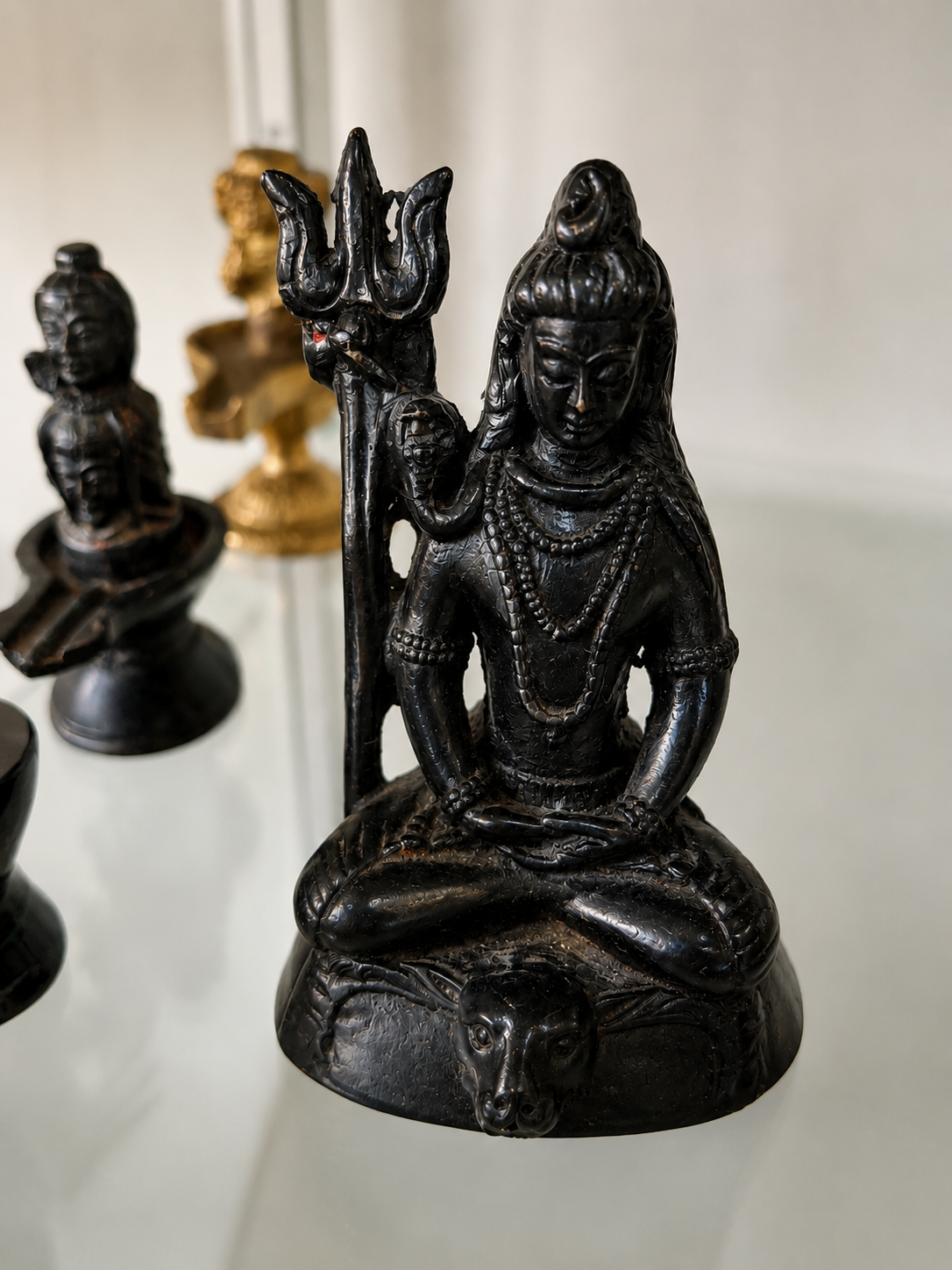
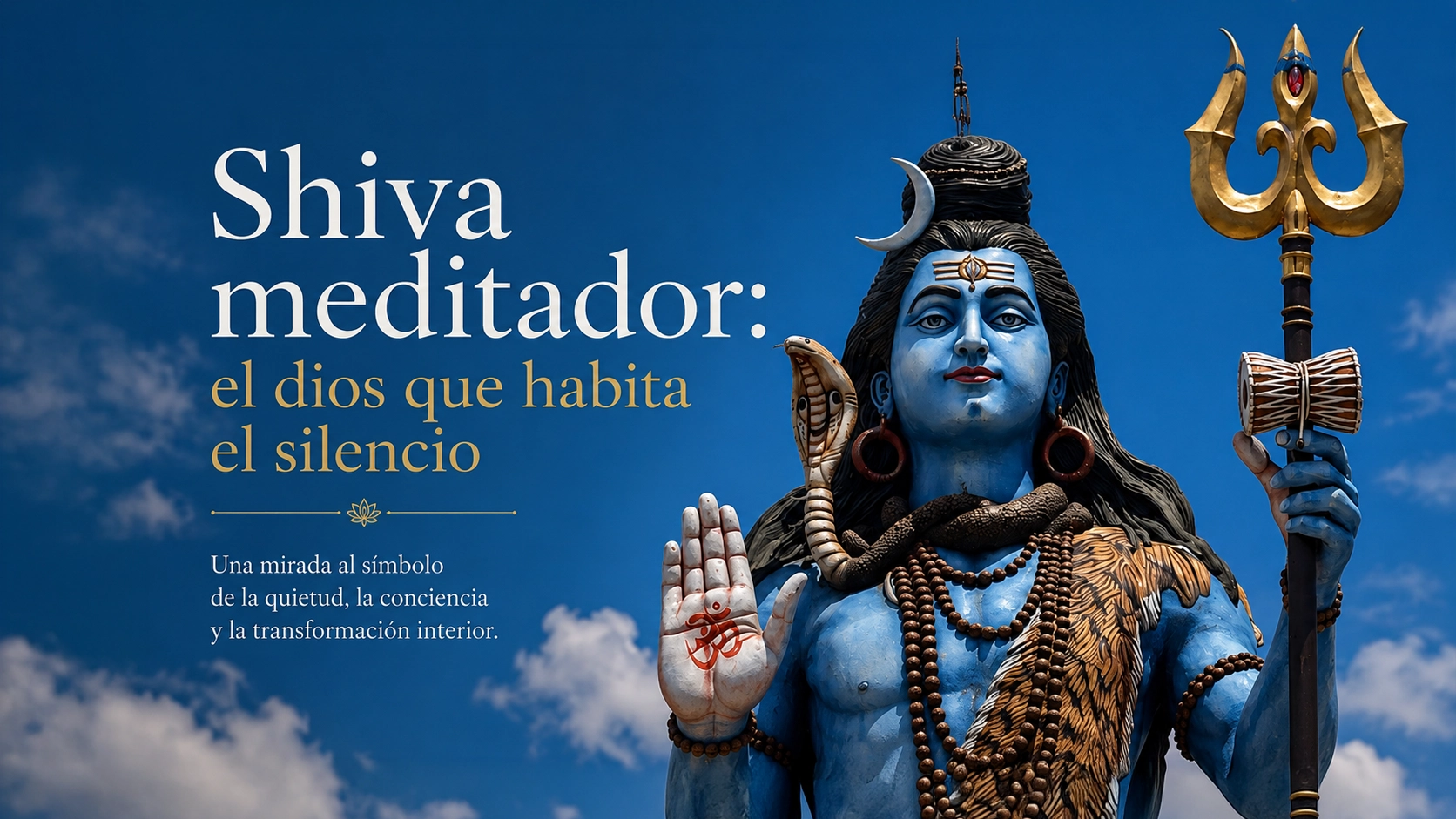
This small sculpture of Shiva occupies a very special place in the Museum of Religions. Unlike the image of Shiva Nataraja, where it appears dancing and symbolizing the constant movement of the universe, here we find a completely motionless Shiva, immersed in a deep meditation.
They are two seemingly opposite images, but they actually represent two inseparable aspects of the same divinity. One expresses the movement of the cosmos; the other, the silence of the spirit.
The Great Yogi
In the Hindu tradition, Shiva is considered the first yogi (d)Adi Yogi), the teacher who transmitted the knowledge of yoga and meditation to humanity.
His abode is located on Mount Kailash, in the Himalayas, where he remains in a state of permanent contemplation. There you do not need temples or palaces. He lives away from the material world because he has transcended desires, ego and suffering.
For this reason, Shiva represents the ideal of the ascetic: someone who does not seek to dominate the outside world, but to know himself.
The meaning of your symbols
Although this figure is simple, it contains some of the most important attributes of Shiva.
THE TRIDENT (TRISHULA)
Next to him appears the trident, one of its best known symbols.
Its three points represent different aspects of existence. They traditionally symbolize creation, conservation and transformation, although they can also be interpreted as the past, the present and the future, or the body, the mind and the spirit.
The message is always the same: all reality is part of a single unit.
The snake
Coiled around the trident the snake appears.
In many cultures the snake symbolizes danger, but in Hinduism it also represents wisdom, vital energy and renewal. By periodically changing skin, it becomes a transformation symbol.
In Shiva, he also expresses control over fear and death.
The meditation posture
Shiva appears sitting cross-legged and hands resting serenely on her lap.
He is not isolating himself from the world. He is watching him with absolute clarity.
For the Hindu tradition, meditation is not simply about relaxing, but about discovering who we really are when the noise of the mind disappears.
dominion over the ego
At the base of this sculpture appears an animal face reminiscent of a feline.
In many representations of Shiva these elements symbolize the dominion over the instinctive nature and over the most primary impulses of the human being.
It does not mean destroying our instincts, but learning to integrate them without governing our lives.
A teaching for our time
We live surrounded by stimuli. The phone, social networks, news and concerns occupy almost every minute of the day.
This small figure proposes exactly the opposite.
It reminds us that there is an interior space where it is not necessary to do anything, demonstrate anything or compete with anyone.
Perhaps that is one of the reasons why Shiva is still such an admired figure after thousands of years. His teaching continues to be deeply current: before trying to change the world, it is convenient to learn to observe ourselves.
A small piece with great meaning
Despite its small size, this sculpture summarizes some of the deepest ideas of Hinduism.
While other images show Shiva creating, destroying or dancing over the universe, here she appears silently.
And perhaps it is precisely that silence that best expresses its true nature: the serenity that remains when everything else changes.
Piece of the Museum of Religions
Title: Shiva meditator
Origin: Indian woman
Religion: Hinduism
Main Meaning: Shiva appears as the great yogi and master of meditation. His figure symbolizes the inner transformation, the domain of the ego, the wisdom and the search for peace that arises from the knowledge of oneself.